
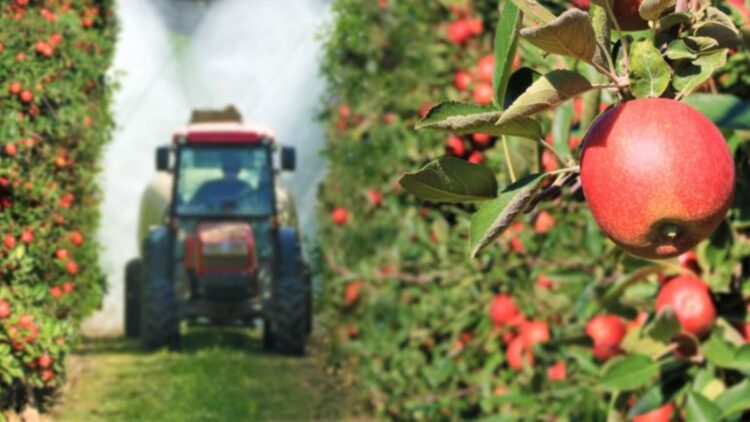
Fruits and vegetables are one of the best foods we can eat to help our health. However, a U.S. analysis shows that some of these so common foods can be way more contaminated than most people imagine… The main issue is pesticides, which are chemical substances used to protect crops from insects, mold, and diseases, but the problem is that many of these chemicals stay on the food even after washing or peeling.
A recent report from the Environmental Working Group (EWG), called Shopper’s Guide to Pesticides in Procude™ 2025, reveled which are the fruits and vegetables with most pesticides residue this year. Among them we can find a fruit that millions of people eat everyday without knowing it’s one of the most contaminated: the apple. So, let’s find out more about apples.
The most contaminated fruit in 2025
According to the EWG official list known as the Dirty Dozen, apples are one of the most contaminated fruits due to pesticides in the U.S. in 2025. This fruit is eaten in schools, at home, in snacks, in lunchboxes, and in desserts. But the study shows that almost all non-organic apples have many pesticide residues.
What the report found was that almost all conventional apples tested had multiple pesticide residues and that more than 95% of all Dirty Dozen™ items, including apples, still had pesticides even after being washed and peeled.
The 2025 analysis does not just count how many pesticides are found. It also measures how toxic they are, making this year’s results more precise and more concerning.
The Dirty Dozen™ 2025
Okay, apples are one of the most contaminated fruits, but what about the number 1? So, let’s see which are the 12 fruits and vegetables more contaminated according to the EWG:
- Spinach
- Strawberries
- Kale, collard, and mustard greens
- Grapes
- Peaches
- Cherries
- Nectarines
- Pears
- Apples
- Blackberries
- Blueberries
- Potatoes
The report also highlights two more foods with high contamination: Bell peppers, hot peppers, and green beans. In total, 203 different pesticides were found in the Dirty Dozen™ produce. Most sampled foods had multiple pesticides at the same time, not just one.
How the EWG report was made
The EWG report is based on real evidence by the U.S. Department of Agriculture. The analysis included:
- 53,692 samples.
- 47 different fruits and vegetables.
- All washed and sometimes peeled before testing.
Even after this cleaning process, scientists detected 265 pesticides.
This year the EWG added an important factor: evaluating how damaging each pesticide can be, based on animal studies. Thanks to this, the report offers a more realistic image of the risk level for people consuming these foods on a regular basis.
What’s more, a study published in September 2025 in the International Journal of Hygiene and Environmental Health. It found that people who ate foods with high pesticide levels had higher amounts of pesticides in their bodies.
How to reduce this pesticide exposure
No, you don’t have to stop eating fruit and vegetables, experts clarified that they are still essential for a healthy diet. The idea is to choose wisely, not to remove them. So, the EWG recommends:
- Choose organic versions of Dirty Dozen™ foods when possible.
- Choose frozen organic options when fresh organic is too expensive.
- Wash all fruits and vegetables, even though washing does not remove all pesticides.
Clean Fifteen™: the safer list
EWG also publishes the Clean Fifteen™, which includes foods with the lowest pesticide residue. The list includes:
- Bananas.
- Avocados.
- Pineapples.
- Cauliflower.
These foods are considered low-risk and had little or no pesticide residue.
So…
The message is simple: don’t stop eating fruits and vegetables, but be aware of which ones have more contamination. When possible, choose organic, wash everything, and mix high-risk foods with safer ones. Eating well is important, but eating well with knowledge is even better.