
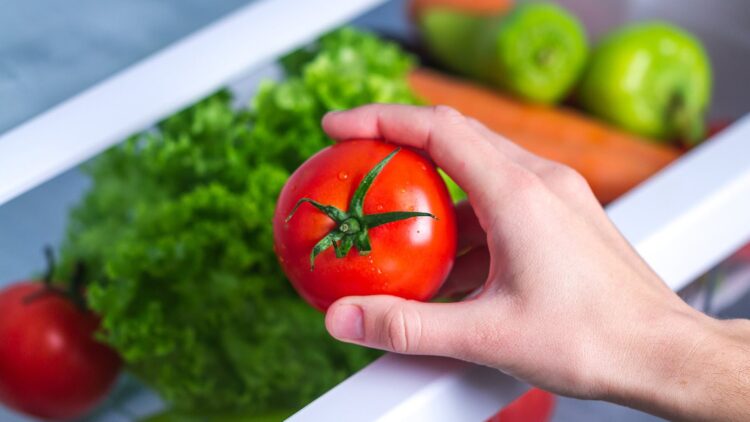
Tomatoes, what a great ingredient, right? It’s probably one of the most used ingredients, but not many people know that keeping them in the refrigerator can ruin their flavor, smell, and texture. This is a rule that chef Roberta, expert on Italian cuisine, repeats over and over again: never put tomatoes in the refrigerator. This is more than a cooking advice, it’s something based on scientific studies about how cold affects this delicate fruit. So, let’s learn more about how we can keep tomatoes.
Tomatoes and the refrigerator
Roberta, who founded the restaurant Con Aroma a Roma, explains that the refrigerator changes food internal structures. In the case of tomatoes, this cold makes them lose their smell, texture, and flavor. She clearly said:
“Cold changes the internal structures of foods, making them lose aroma, texture, and flavor. The tomato is a sensitive fruit. It has enzymes that continue working after it is harvested.”
According to the chef, when a tomato is in a refrigerator its texture becomes mealy, grainy, and watery. This happens because the cold stops the enzymes that give tomatoes their firm and juicy structure. What should be a fresh, flavorful tomato becomes soft, mushy, and lifeless. So, for Roberta, properly keeping ingredients is the first step to achieve delicious meals. That’s why we should respect tomatoes’ natural process.
Science behind this
The tomato is an extremely sensitive fruit when exposed to low temperatures, when kept below 12ºC it suffers a problem known as chilling injury.
A study published in Frontiers explains that these low temperatures prevent normal ripening and instead create internal damage to the tomato. Cold temperatures break the membranes of the tomato’s cells which causes certain enzymes to be released where they shouldn’t be. One of the main enzymes is polygalacturonase, which breaks down substances that keep the tomato’s cells firm. The result of this is:
- A mealy texture.
- Watery and mushy flesh.
- Loss of firmness.
- A tomato that seems aged and low quality.
Also these temperatures slow down or completely stop the production of the natural chemicals that give tomatoes their aroma. These include aldehydes and alcohols that create the classic tomato smell. There’s more! They also block the “post-harvest enzyme,” which creates sugars and aromatic compounds that complete the tomato’s flavor profile.
So even if the tomato looks fine on the outside, on the inside it has already lost much of its quality.
The scientific study
A research from the Andalusian government analyzed the tomato variety ‘Raf cv. Conquista’ and tested it at different temperatures. What the research mainly found was that:
- At 10°C, a typical refrigerator temperature, tomatoes showed clear signs of chilling injury, including rapid aging and weight loss.
- At 13°C, tomatoes did not show visible external damage, but internally scientists detected metabolic disorders.
The study concluded that the minimum recommended temperature to preserve this variety is 13°C, which is far higher than the temperature inside any household refrigerator. This confirms that storing tomatoes in the fridge causes both visible and invisible damage.
To sum up
Both Chef Roberta and scientific studies agree: tomatoes should never be stored in the refrigerator. So, the best way to keep tomatoes at their highest quality is to store them at room temperature, in a cool and ventilated place—far from the refrigerator. With this small change, your tomatoes will retain all their flavor and your dishes will taste much better.
We hope this information was helpful because many people don’t know about this. Now, you can enjoy your tomatoes with their natural flavor, texture, and aroma. Do you know what you should do? Share this tip with your friends and family, because sharing is caring!