
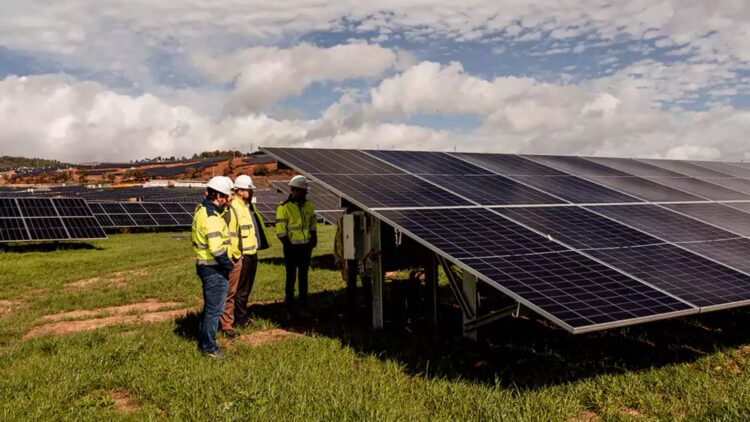
Have you ever heard about the solar project Fundão in Portugal? It’s a huge solar plant that covers almost 200 hectares and uses about 200,000 solar panels. The idea behind the project is to generate clean energy, reduce pollution, and support local economy. Even though the theory seems like an absolute success, the reality shows that working on big scale projects has unexpected challenges involving the community, nature, and energy efficiency. So, let’s find out more about this solar plant, shall we?
Big ideas
The Fundão Solar Photovoltaic Plant was developed by the Spanish company Dos Grados, it has a capacity of 126,5 MW, and it produces between 215 and 220 GWh of electricity per year. To have a clear idea about these numbers, you should know that this is enough to provide energy to 61,000 homes and businesses, and it avoids the emission of 826,000 tons of carbon dioxide per year.
Could you guess how much money was spent on this project? About €5 million? More! It was €90 million. I mean, the project also aimed to help local economy and support Portugal’s goal of reaching 51% of renewable energy by 2023.
What’s more, future innovation was considered like combining solar with wind energy, energy storage, or green hydrogen projects for data centers. However, they experienced some challenges.
Fundão solar plant challenges
This project is a clear example of how a big scale solar plant faces unexpected issues such as:
- Solar energy depends on the sun: The electricity production varies according to the weather and the time of the year. For example, clouds, rain, and shorter days in Winter reduce the amount of energy generated. Although storage and hybrid backup systems were planned, they were not fully ready, which means the plant’s performance is irregular and depends on nature’s rhythm.
- Land and community impact: The plant covers almost 200 hectares, which affects citizens and the environment; since cattle farmers lost grazing or farming land and ecologists were concerned about trees, wildlife, and natural habitats.
To adapt, Dos Grados allowed cattle to graze between the panels and replanted trees in some areas. This shows that a large solar project must fit with the land and the community.
Local benefits and jobs
Despite the €90 million investment, the solar plant generated less than 10 permanent jobs for the local community. Currently, neighbors see how energy communities work, projects that allow nearby homes to share cheaper solar energy. This can help balance the huge infrastructure of the project with real benefits for nearby communities.
Fundão: adaptation and learning
Fundão is more than a solar plant, is an example of how big scale energy must adapt to the community, land, and the ecosystem. Some of the strategies used are:
- Grazing protocols for cattle.
- Discussions about energy storage.
- Early experiments with community energy initiatives.
This shows that solar projects cannot be static, they must constantly adapt to function efficiently and fairly.
So…
The main lesson here is that a solar plant at large scale requires adaptation, negotiation, and consideration of all stakeholders. Fundão demonstrates that progress is measured not only in kilowatt-hours produced but also in how benefits are shared, and costs are managed for the community and the environment.
So, after all we have mention in this article, we can say that this project is both a symbol of clean energy and a warning about how complex mega solar projects are.
Do you think this project is more of a benefit than a disadvantage for the local community? Imagine living in this place and experiencing what cattle farmers are, would you be okay with it?