
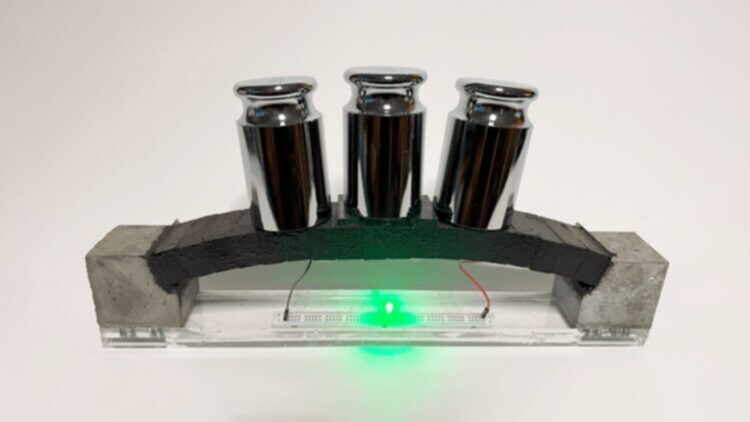
There’s a new technology created in the U.S. that could completely change the way we store and use energy: a battery that lasts ten times more than current lithium batteries. Surprisingly, it works using materials similar to the concrete used in buildings, roads, and bridges. This innovation could transform entire cities and the role of the U.S. when it comes to the technological competition against China. So, let’s learn more about this new technological development.
What could change everything
Researchers in the U.S. have created a type of battery that’s completely different to the ones we know. This battery lasts ten times more than current lithium batteries, which are the ones we use on smartphones, computers, and electric vehicles. If this new technology keeps improving, it could help cities function in a more efficient way and help us depend less on traditional energy resources.
In the middle of this innovation there’s a special material called ec³, which is made by mixing cement, water, and a liquid with carbon. By combining them, they form an internal network that can conduct electricity. This makes the concrete capable of storing energy and releasing it when needed—just like a battery, but using construction materials instead of typical battery components.
How this concrete-based battery works
This new system works like a supercapacitor, which is a device that can store and release energy quickly and efficiently. The most interesting part is that this material is added directly during the normal concrete-mixing process, without requiring extra steps. This makes it possible to create concrete blocks or structures that are both strong and able to store large amounts of energy.
Tests show that the material can be made denser, allowing it to hold even more energy. Researchers have even experimented with sea water and other special liquids to improve its performance and make it more sustainable. Thanks to these improvements, this material’s capacity has multiplied by 10, which makes it the best option to store energy at large scale.
Where this technology can be used
One of the most highlighted aspects about this technology is that it’s not thought for small devices, but for huge structures. For example, it could be used in buildings, bridges, roads, tunnels, and other city elements. This means they could become places to store energy by themselves.
When integrated into the architecture and construction systems, these structures could act as distributed energy nodes. In simple terms, every building or bridge could store renewable energy, such as solar or wind power, and release it when there is no sun or wind. This would help keep the electrical grid stable and more efficient.
What’s more, this special material has other important benefits like: it can help structures fix small cracks and, at the same time, absorb carbon dioxide from the air. This helps reduce pollution and constructions last longer.
‘’Cement battery’’
This technological development also has an impact in the global energy landscape. The U.S. could become a leader in this new generation of energy storing systems. This would challenge China when it comes to the production of batteries, since this country currently controls a great part of the processes–from the extraction of the materials until de manufacturing.
If this new technology keeps advancing, the U.S. coils strengthen in terms of energy independency, improving its infrastructures, and depending less on external sources of advanced batteries.
So…
This concrete-based battery has many benefits for the U.S, it could even shift the balance of technological leadership between the United States and China. Although it sounds futuristic, it is based on familiar materials, making it a realistic possibility for the future of modern cities. What do you think about this battery? Could it be as good as it sounds?