
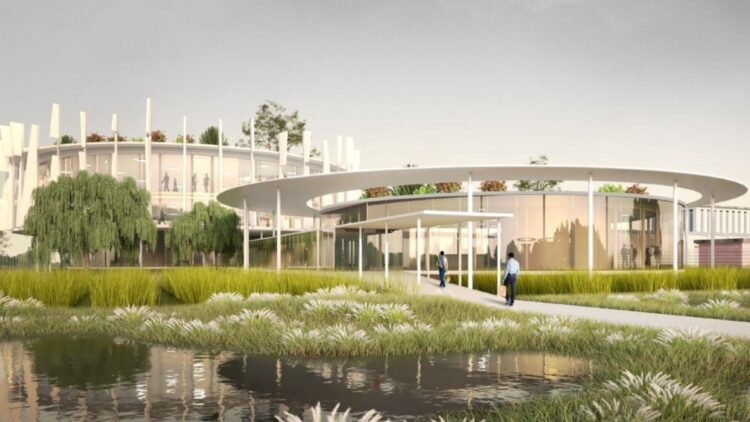
Today, we are going to talk about the Fusina plant in Venice and how it’s surprisingly changing. What was a grey and polluting industrial fabric, it’s now a space full of plants, nature and areas for people to visit. The main idea is to show that old industrial places don’t have to be ugly or useless, they can change, adapt, and be used as green spaces that benefit the city and the environment. So, let’s find out more about the Fusina plant.
From a fabric to a garden
Something very important is happening in Venice: near the lagoon, a power plant that used to work with coal (and that was only a hard and grey structure) is changing. It’s no longer a closed and sad place because it’s changing into a public landscape, a place full of plants.
This change combines industry, nature, and community; and makes the place softer, more beautiful and more interesting. The project aims to show how cities can mix with nature and industrial spaces in a new way.
Thanks to Enel
The great transformation of the Fusina plant is happening due to a project called ‘’Resilience Lab Grid’’ created by Frigerio Design Group. They won the Enel ‘’New Energy Spaces’’ competition. The idea is to reinvent the old coal-fired power station and turn it into an energy hub that includes plants, open spaces, and new ways for people to interact with the area.
Today, the industrial building has many hidden ways where plants guide the visitor. These plants also create different microclimates: the air, temperature, and humidity can feel different depending on where you stand. Instead of seeing only machines and concrete, visitors now see a mix of architecture and nature working together.
How the Fusina plant uses nature
An important idea about this project is the biophilic design, which means using nature not just as decoration but as an essential part of the structure. In the Fusina plant, vegetation becomes part of the architecture itself, including:
- Vertical walls covered with greenery
- Courtyards with natural plants
- Facades that let air flow and help control temperature
These green areas help the air to be cleaner, the temperature nicer and the place to feel more alive. So, this proves that vertical gardens can improve comfort, biodiversity, and also tell the story about sustainability.
Practical and symbolic advantages
The green walls and planted spaces are more than something to make the place look beautiful, they also have very useful functions, like:
- Absorb dust
- Reduce heat from the sun
- Control humidity
All of this is very important for Venice’s sensitive maritime environment. The green areas also show a symbolic transformation. They communicate that this old industrial site is moving toward ecological change.
What’s more, the Fusina plant is also becoming an educational place, where people can learn about how to improve buildings and environments through sustainable solutions.
A laboratory for learning
The Fusina plant’s green walls and gardens work as living laboratories. There people can observe:
- Plant species tests
- Irrigation system tests
- Biodiversity studies
Workshops and tours allow visitors to learn how nature can improve industrial spaces. This way, a place that was abandoned and dark becomes a space that speaks curiosity and ecological awareness.
A model other cities can copy
What’s happening in the Fusina plant shows that old industrial spaces can have a second life. These places can become:
- Green corridors
- Public spaces
- Local economies
- Cultural programs
By combining energy transition, creative reuse of buildings, and vertical farming ideas, cities can create jobs, support tourism, and repair environmental damage. This shows that industrial places can become living generators of resilience, culture, and community renewal. Isn’t it a great idea?