
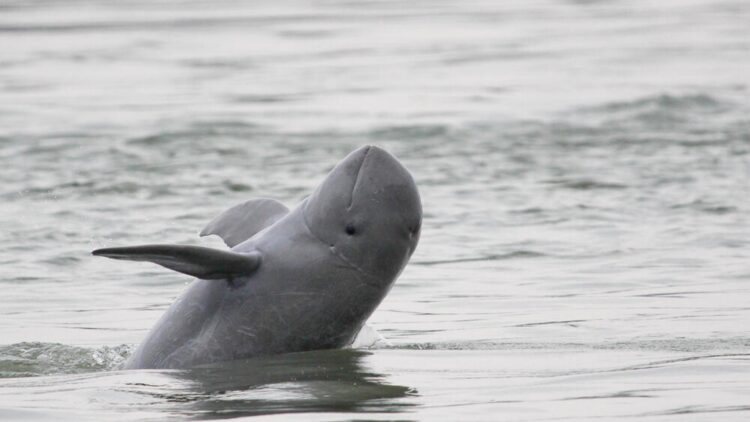
There are animals that are especially charming, like the Irrawaddy dolphin, which is considered the sweetest and most enigmatic animal in the world. And also one of the most endangered. In Southeast Asia, Myanmar, Cambodia, and Indonesia, they have lived alongside fishermen for years, cooperating with them, but now there are threats that put their survival at risk.
Fishermen did not go alone to the river
In places like the Ayeyarwady River in Myanmar, fishing begins with a simple gesture: the fishermen gently tap the side of the boat and wait. A few minutes later, they appear, the most beautiful dolphins in the world.
The dolphins push schools of fish toward the nets and make the catch easier, and they also take advantage of the fish that lag behind to feed. No one forces anyone, it is true cooperation, learned and passed from mothers to calves like another tradition of the river. Truly incredible.
Unprecedented
This type of collaboration is extremely rare in nature, because it is not only instinct but social learning, memory, and above all something very important in any relationship: mutual trust.
Some dolphins even developed their own signals to communicate with their fishermen. The most famous was Gotama, who became a local legend. His story is still told along the riverbanks.
A cultural symbol
For riverside communities, this dolphin is part of the soul of the place. In some legends they are said to be children transformed. In others, protective spirits of the river. That respect has allowed decades of coexistence, a balance, a friendship.
A dolphin full of peculiarities
In addition to helping with fishing, the Irrawaddy dolphin has unique behaviors. Some spit jets of water to group fish. Others use movements that scientists believe serve to communicate or even to court, and they are very special because they can live in both fresh and salt water. That is, they are adaptable, intelligent, and yet very vulnerable animals.
On the edge of the abyss
In rivers such as the Mekong, the Mahakam, or the Ayeyarwady, many populations are far below the endangered threshold. Nearly invisible gillnets, pollution, dams, river traffic, illegal fishing: everything is causing this friend to slowly disappear, and scientists fear it could end up like the Yangtze dolphin or the vaquita marina, animals that are extinct.
What can we do?
For now, efforts are being made to keep dolphins away from these nets thanks to acoustic emitters created by researcher Danielle Kreb. Since they have been implemented, accidental deaths have decreased significantly, and we hope they continue to decline. We cannot lose this animal, it is so cute.
Conservation starts in the community
In Cambodia, for example, there are river guards who remove these nets and help raise awareness among other fishermen to protect these dolphins. They are also promoting responsible ecotourism to prevent these ecosystems from being destroyed.
The future can still be written
Saving the Irrawaddy dolphin is important for everyone. Our rivers and our cultures cannot be lost due to poor care of our planet. Environmental education is needed, keeping culture alive, and truly supporting those who live from the river and fight to keep it alive.
This dolphin is much more than a pretty face. It is the description of coexistence between humans and wildlife. It can work, and in Asia it does, based on respect and cooperation. There is still time to preserve this coexistence, but we must act now. We cannot lose this friendship, do you agree?