
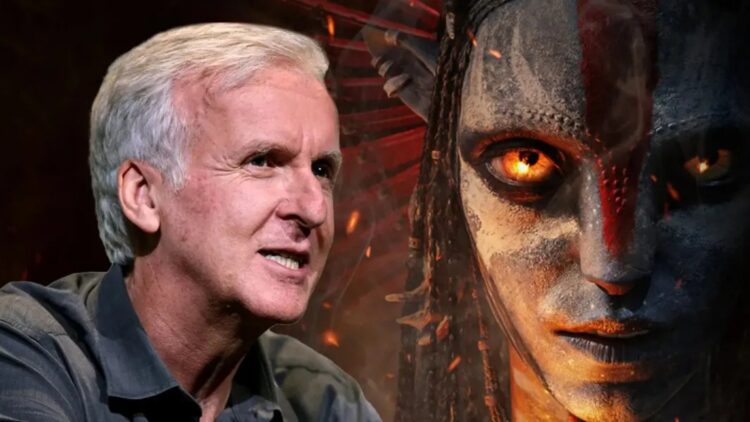
Avatar is one of the jewels of cinema and one of the most profitable films of modern cinema, and now James Cameron and Disney have been sued for alleged plagiarism. Yes, the lawsuit comes just days before the release of the third film in this incredible trilogy, as an animator claims that Avatar: The Way of Water “borrowed” key ideas from one of his science fiction works, and he is asking for at least 500 million dollars and for a judge to stop the release of the new film. Inspiration or plagiarism? Let’s take a look.
Who is suing and what is he asking for
The plaintiff is Eric Ryder, an animator specialized in 3D technology. According to his version, he worked in the late 1990s with Lightstorm Entertainment, James Cameron’s production company, on the development of his own story titled KRZ. The first details begin to appear.
Ryder maintains that a large part of the Avatar universe, and especially the second film, is very similar to his work and that he has not received any kind of financial compensation for it.
It is not the first time he has tried
Wait, because Ryder already sued in 2011, when the first Avatar was released. At that time, a state court dismissed the case after considering that Cameron had developed his story before receiving the animator’s material.
But the new lawsuit focuses exclusively on The Way of Water. According to Ryder, that is where the allegedly copied elements appear for the first time.
Which parts of Avatar are in dispute
- Humanoid beings in an alien world
- An oceanic environment with a central role in the story
- An Earth corporation that exploits natural resources without scruples
Up to this point, it could resemble any classic idea, but the heart of the conflict is that in The Way of Water a substance extracted from a marine creature appears which, after being processed, allows human life to be extended. According to Ryder, that element was key in KRZ and did not appear in the first Avatar.
Coincidences or something more
The accusation argues that these are not generic ideas of the genre, but a concrete appropriation of narrative elements that are protected.
Now it will be up to the court to decide whether these similarities are too specific to be casual or if they fall within what is considered common ground in science fiction.
Ryder is claiming a minimum of 500 million dollars, a figure that does not come out of nowhere if we take into account that Avatar moves billions in box office and merchandising, but he is also asking for the blocking of the release of the third film, Fire and Ash.
Disney and Cameron remain silent
Neither Disney nor Lightstorm Entertainment have said a word, and with the release so close, that only increases the tension and speculation. These kinds of lawsuits are not rare in cinema, but when they affect a franchise the size of Avatar, everything is magnified. James Cameron is not just a director, he is THE director himself.
Getting inspired is not copying
Will the trial be able to answer which ideas can be legally protected or whether they are a common language of the genre? How will they know if it is something that appears in hundreds of stories online or only in Avatar?
What could happen now
The process has just begun and could last months, even years. For now, the release remains on track unless the judge decides to take precautionary measures, but we know that would involve millions of dollars that we do not know if they are willing to risk.
Whatever the outcome, the case could set an important precedent on how creative ideas are protected in big budget cinema.
Between success and doubt
Avatar has been the definition of visual innovation and spectacle, and now it is clouded by controversy just before its big release arrives. Will the lawsuit succeed?