
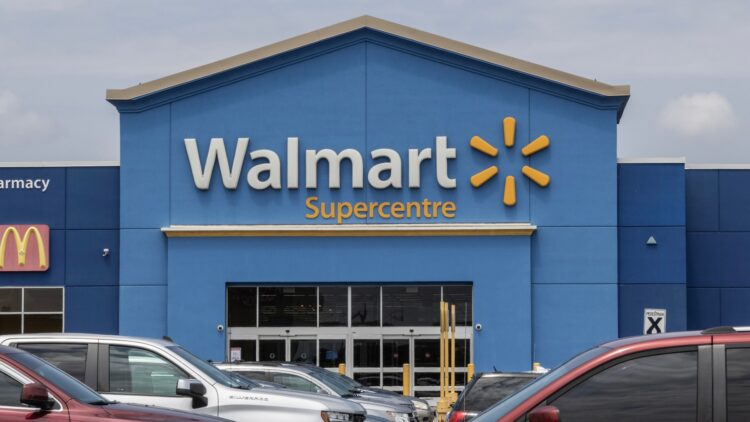
Walmart has just placed a historic order to build buildings using 3D printing, a large scale commission that aims to change the entire world of construction in the United States. Yes, with 3D printing.
The project will be carried out by the US company Alquist 3D, because traditional methods need more speed and efficiency, and they also need to be more sustainable, so this bet seems to be arriving just in time.
A before and after
Yes, you read that right, and it is Walmart that has placed the order. It is also the largest 3D printed construction order ever made by a corporation. They want to build new facilities using giant printers that build layer by layer, as if the building were drawing itself. This way, 3D stops being something experimental and becomes practical in real life.
Why is Walmart saying this now?
Because this way construction takes less time, it is much cheaper and there is less dependence on specialized labor.
And this last point is the most key of all, because the construction sector has been dealing for years with a lack of workers, or of decent wages and conditions, delays and cost overruns. With a technology that reduces unforeseen issues, everything might become easier.
Who is Alquist 3D
Alquist 3D has been developing large scale additive construction systems for years, with experience in both housing and commercial buildings. Their printers can build structural walls in a fraction of the time required by traditional construction, and that is precisely what convinced Walmart for this project.
From “experimental” houses to commercial buildings
Until now, when people talked about 3D printing in construction, it was almost always in an experimental sense, pilot houses, small projects, demonstrations, but now they want large commercial facilities, as large as a Walmart.
How is a building constructed with 3D printing?
The process is fascinating for technology lovers. A large format industrial printer deposits layers of a concrete like material, following a very precise digital design.
This creates precise, uniform structures, with fewer errors and less wasted material. It also allows the integration of shapes and ducts that, with traditional methods, would be much more complicated and expensive to build.
Less waste, more sustainability
Another advantage is that much less waste is generated because only the necessary material is used. This reduces environmental impact and fits perfectly with the sustainability goals of large companies.
And of course, when companies like Walmart bet on something like this, they launch a new trend, just like when influencers promote products.
Construction changes, and jobs change
But all power comes with responsibility, and this type of construction can lead to less traditional manual labor and many more jobs in digital design and programming. These may be other jobs that end up being overshadowed by technology, once again.
What comes next?
For now, the agreement focuses on specific buildings, but if everything works, expansion could begin very soon in warehouses, distribution centers and similar facilities. It could become a common tool for these large chains, and that would not be surprising at all.
An alternative and a new stage carried out by Alquist 3D together with Walmart. We will see if it is a viable solution, if it becomes the norm, or if it simply does not succeed. What do you think will happen?