
For years we have believed that climate change was going in only one direction: heat. But what if, instead of arid lands and melting ice, another idea came onto the table? Cold.
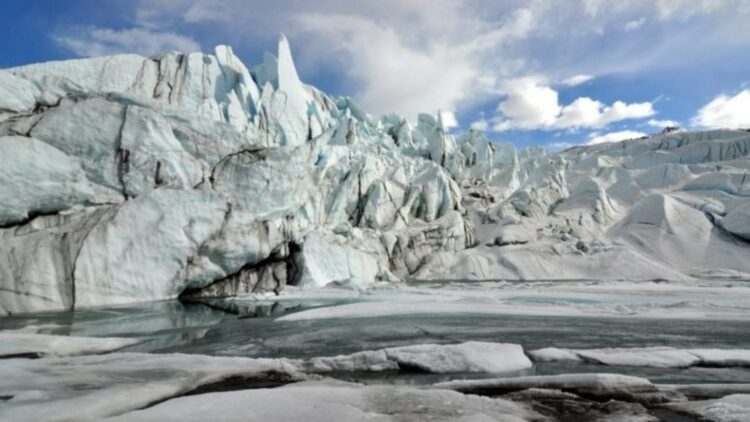
A new study by researchers from the University of California, Riverside, and the University of Bremen suggests that extreme warming could end up triggering what we would call “a glitch in the matrix”, and that Earth’s climate could return to an Ice Age.
Yes, you read that right, heat would end in cold, not because it “balances out”, but because it overshoots.
A natural thermostat
For millions of years, Earth has known how to regulate itself fairly well, and geology has been in charge of that. When CO2 rises and temperatures increase, it rains more, that rain erodes rocks, drags carbon into the oceans, and the work of plankton begins (not SpongeBob’s plankton, real plankton).
This microscopic plankton uses that carbon, grows, dies, and sinks. And with it, CO2 disappears from the atmosphere for thousands of years, so there is less greenhouse effect, more cold. Until now, we thought this was the only “thermostat” we had and that everything was under control.
Here comes the unsettling part
The study suggests that if warming is too intense and lasts too long, that thermostat does not correct itself, it overreacts. This would mean that the oceans fill with nutrients, mainly phosphorus, and that would cause phytoplankton to overgrow as well.
This means more carbon would be trapped. The problem is that the seafloor would start absorbing more CO2 at a much faster rate than, for example, volcanoes release it. Temperatures would then start to drop very fast, pushing the planet into a severe glaciation very similar to an Ice Age.
Plankton, hero or villain?
We usually talk about plankton as a climate ally, and it really is, but in this scenario it would definitely not be our friend. In very warm, low oxygen oceans, phosphorus is released again, feeding plankton even more. This would create a “vicious cycle”: more nutrients, more plankton, more CO2 trapped, more cold.
So is a new Ice Age coming?
Slow down. First, because this theory is a hypothesis, and second, because scientists make it clear that if it happened, we are talking about hundreds of thousands of years. We will not be here to see it. In the short term, the problem will be the same: extreme heat, droughts, sea level rise, and much more severe atmospheric phenomena. The cold would arrive when humans had already disappeared.
Beyond the fear of ocean currents
Our fear was the collapse of systems like the ocean conveyor belt, known as the AMOC, but this study talks about how deep chemistry works and what can happen when it works too much. The reality is that the collapse would be quite significant.
It is not pleasant to read that our planet could wipe us out, of course not. Luckily, we will not see it, but it makes one thing clear: life on Earth appeared almost by chance. The planet does not “take care of us”. We are simply living on borrowed time on its surface.
It does not seek our stability or our comfort, but its own geological balance, even if that means we disappear. Faced with this situation, the only thing we should think about is slowing climate change now, while it still seems we are in time.
Earth has already gone through Ice Ages, we know that. But now, for the first time, there is a “conscious” species that could arrive in time. Do you not think so?