
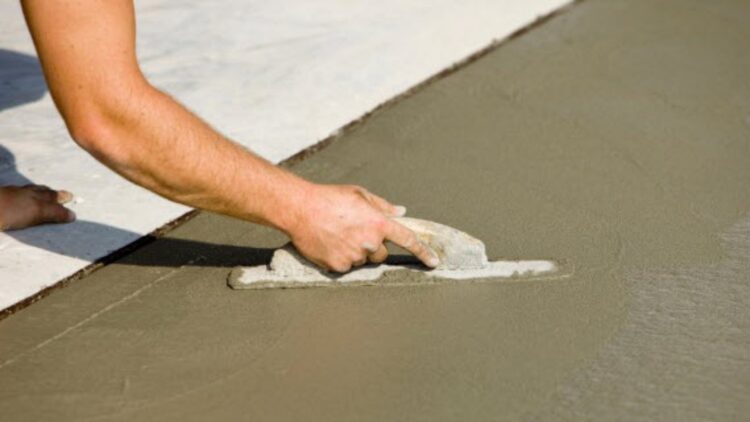
For years we have assumed that to build you need cement, there were no other alternatives (and if there were, they were not as solid as cement). But cement has a very large environmental cost, so now people have started to question which materials could work as a green alternative to cement, and no one would have thought that compacted earth reinforced with recycled cardboard could be one of them. Yes, earth and cardboard, very humble materials that we can find anywhere, could be a major competitor to traditional concrete. Is that possible?
Cement and environmental footprint
Cement has been the absolute king of construction for decades. It is used in absolutely everything: buildings, roads, bridges, and entire cities. It is very useful, but producing it pollutes a lot. Around 8% of global CO2 emissions come from construction with cement.
Now that we are in the middle of a transition toward a more ecological and environmentally responsible world, scientists are looking for alternatives that work just as well and do not pollute as much.
Going back is not going backwards
Nothing new has been invented, they have simply rescued an ancient technique: rammed earth, which was used for centuries in different parts of the world, and many of those buildings are still standing after several generations. Now, instead of reinforcing it with cement, the idea is to confine it inside recycled cardboard tubes. And do not be fooled by the word cardboard, it is much stronger than you think.
How is it built
The process is like a basic handcrafted process, almost like doing crafts as a child. Earth is used, it is compacted in layers inside recycled cardboard tubes, and a thin protection against moisture is added. It is not sophisticated and it is not expensive either.
These tubes are then integrated into the structure of the building and surrounded with damp sand to help provide cohesion, and the result is solid, stable, and reduces the carbon footprint.
And the advantages?
The first one is quite clear: it produces much less pollution. Compacted earth naturally regulates temperature. In summer it keeps the interior cool, and in winter it is supposed to retain heat, so less heating and less air conditioning are needed. This helps save energy and keeps your electricity bill from being so high.
In addition, it should be considered that this is much more than just an option for social housing, rural areas, or regions with few resources.
But does it really hold up?
That is what studies say. It can last around 25 years without additional reinforcements and up to 70 years if it is combined with traditional materials. Of course, there is still a long way to go before replacing concrete in large infrastructures or skyscrapers, but for houses, low rise buildings, and other sustainable projects it fits perfectly.
Many universities are already exploring this alternative and other similar ones for new projects.
Changes in construction?
It seems so. It is one of the sectors that is hardest to decarbonize, which is why more and more alternatives are appearing. Some seem more profitable than others, but research is not lacking.
This proposal aims to reduce emissions and also opens the door to a more accessible way of building. Is more research needed? Of course, but it shows that there is a desire to change the world.
The beginning of the end of cement?
No, there is still a long way to go, especially because our dependence on it is quite large. But its absolute reign is starting to have successors, and that is already very good news. We need to combine ancient knowledge, modern innovation, and who knows, maybe materials that have not yet been discovered. Perhaps the green future will no longer have cement, but instead this mixture of paper and earth.