
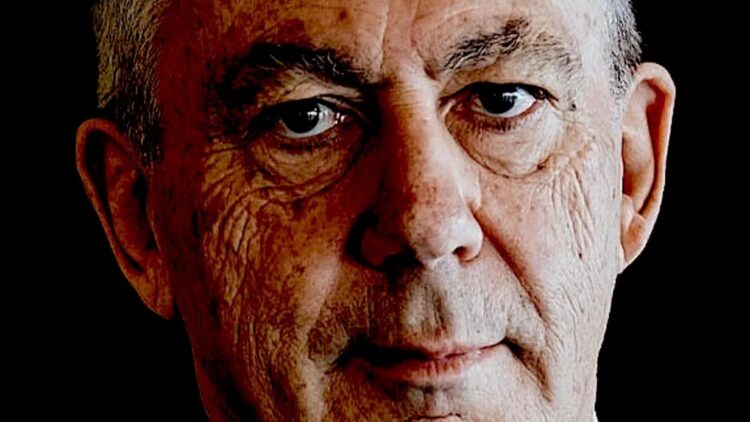
Turning 75 is not just blowing out candles, 75 is already something serious, and it also means accepting things that you do not always feel like accepting. For Rob Campbell, this birthday has been exactly his turning point. One of those moments when you ask yourself whether you are still contributing or whether you are occupying a place that no longer belongs to you. Clinging to power at this age usually does more harm than good. To others, and to oneself.
Refusing to age
Campbell acknowledges that with age there are things that never get better, neither memory nor energy… And the reality is that you are already on the starting square again and the margin for the future keeps shrinking, life is not a tragedy.
The problem appears when we pretend that this is not happening, when we keep acting as if we were at our best… even though we are not anymore.
Believing yourself indispensable
This is where his reflection becomes uncomfortable, Campbell points out that many older people in positions of power take too long to admit that they are no longer at the peak of their abilities. And what do they do then? They stay, block succession… and slow down possible changes.
Experience does not always rule
This is not about pushing older people aside or isolating them, not at all, experience does have value and a lot of it, but not always from the command chair. Maybe at this age the best position is support, strategic advice or mentoring, but sometimes we are not ready to take that step aside and let someone else take charge. Maybe because of ego, or maybe because of fear of being completely replaceable.
The future should not be decided by those who are not going to live in it
One of the most powerful ideas in his text is that the big decisions about the future should be made, above all, by those who are going to inhabit it, not because older people have nothing to say, but because their experience belongs to another world that no longer exists. Clinging to it, without adapting it, can become a brake. And maybe even many of our leaders do not understand this.
Command less, accompany more
At his current stage, Campbell says that one of his most useful roles is to accompany younger people, and it is not always comfortable. We come from different worlds, besides, many believe that mentoring is giving orders or repeating old formulas, but it has nothing to do with that. It is listening, asking, giving tips and leaving space for ideas that do not quite fit with one’s way of seeing the world (but which is the current one). It is a process of cooperation between both sides, right?
Prepared young people but with fear
Campbell observes in the new generations that he sees them as more trained, more educated and more aware than his own (we did not really have another choice either). But he also sees them with more fear of making mistakes.
Even so, he detects a spark there in those who dare to push for social, political and environmental changes, even if they do so with doubts. And that is where he finds hope for the future.
Power, ego and ecological crisis
His reflection connects attachment to power with the major problems of the present, especially the ecological crisis (not to mention the return of imperialism, wars, a long etc).
According to Campbell, separating the human from the environmental has been one of the big mistakes that have been made and it prevents us from reacting with the urgency that the current moment is asking of us.
Knowing when to leave is also leadership
His message is powerful, at 75 he does not talk about retiring out of obligation, but about learning what your place is and letting the new generations create their future. At the end of the day, that is life, right? Living, but also making room.