
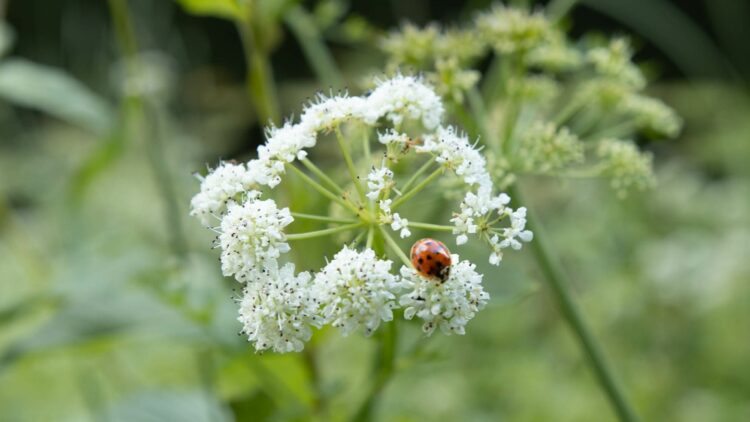
There is a seemingly harmless plant lurking in your garden. And it could be endangering your health and that of your family. We are talking about the giant hogweed, an invasive species that can cause skin burns, and not only that, it is considered a dangerous plant because it can alter DNA! Before you panic, we are going to explain everything you need to know to be able to identify it and act in case of contact.
What is giant hogweed and why is it dangerous?
At first glance it looks like a flower, like all flowers, pretty, delicate and small, but, even though this flower is very pretty, don’t touch it! They are white flowers that are grouped together in the shape of an umbrella, and can reach up to 6 meters in height!! But, behind these details lies a real danger. This flower produces a sap that is toxic, it contains chemical compounds that are capable of adhering to the DNA of skin cells. In addition, once this substance comes into contact with ultraviolet light (from the sun), it triggers a type of allergic reaction that can produce anything from redness to severe burns on the skin.
What we are going to tell you now is a chain of disasters, but the affected areas, that is, the areas of the skin that have been burned by contact with this plant, are left with scars and are hypersensitive to the sun for years!
You also have to be very careful not to expose the contact to your eyes because you could lose your vision permanently. As you can see, this plant is quite dangerous for our health and any precaution we take with it is little.
How to recognize this plant?
What you have to know is that this plant does not live in remote areas, but is found in parks and gardens. In the United States, it has been detected in various parts of the country, among which New York, Washington, Maine, Michigan, Ohio and Pennsylvania stand out.
To identify it you have to take into account four fundamental things:
- This plant can measure between four and six meters!
- Its stem has purple spots and rough white hairs.
- It has large white leaves grouped together as if we were looking at a giant parsley.
- Its white flowers form in groups that look like umbrellas, making them very striking to the eye.
If you have had the bad luck to touch this plant, you need to act quickly to minimize the damage. The steps to follow are the following:
- Wash the affected area with soap and water as soon as possible
- Avoid exposure to the sun for at least 48 hours after contact.
- Apply a cream with hydrocortisone.
- If unfortunately, this plant has come into contact with your eyes, rinse them with water for 15 minutes and wear sunglasses the following days or avoid direct sunlight.
If you see that the symptoms persist, please go to the doctor for advice on what to do.
What if I have it in my garden?
Don’t touch it! Don’t even try to get rid of it yourself because anything that comes into contact with this plant can cause the effects we’ve described above, so it’s best for everyone to try to contact local authorities or invasive plant control services so they can use specialized protective equipment and eradicate it from your garden.
Is it bad for our pets too?
Yes, our animals also suffer the wrath of giant hogweed, and they also have symptoms very similar to those caused in humans, only they can even ingest it and cause permanent damage to their gastrointestinal system. It is very important that you do not let your pets get close to these plants, and, if they do, consult your veterinarian quickly so that the symptoms do not get worse.
What is an invasive plant?
These are species that appear in some ecosystems and that, when they establish themselves there, cause significant damage to it, altering habitats, changing soil compositions or displacing local species. In addition, they usually reproduce much faster than any other species (whether plant or animal). In the case of giant hogweed, each specimen of this plant can produce up to 100,000 seeds! Which makes controlling it practically impossible.