
The automotive world never stands still, we already know that, but are we facing a new revolution? More and more engineers and scientists are turning to find realistic alternatives to fossil fuels, and now, they are challenging everything we know.
For years, hydrogen has been presented as the most viable option for this energy transition (although many users consider it to be more expensive than traditional fuels), but now, a water-based technology is stealing the show.
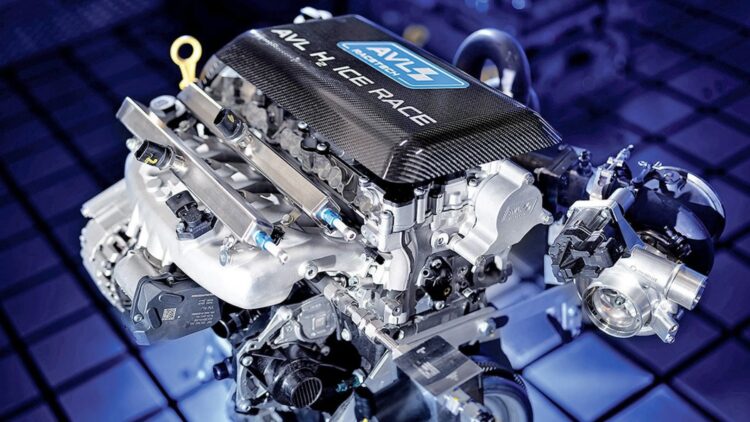
As you read it, a hydrogen combustion engine with water injection has managed to break power records and demonstrate that it is possible to overcome many of the limitations that this type of technology had until now. Is this the future of cars? Let’s find out.
What is happening?
Hydrogen has been a trending topic for some time, and in recent years, the so-called green hydrogen has started to sound louder than ever. More and more countries are investing in its development, betting on a cleaner energy model.
The water engine steals the show
Let’s explain this invention, and it is that, this engine does not eliminate hydrogen, but makes it more efficient, because by injecting water the combustion is better controlled.
The company behind this innovation is AVL Racetech, an Austrian firm that has been developing engines for racing cars for years. Together with the engineers from the HUMDA laboratory (in Hungary) they have achieved what seemed impossible: a hydrogen combustion engine capable of generating 410 horsepower with only two litters of displacement!!
How does this water engine work?
The secret of the engine is in the Port Fuel Injection (PFI) technology, a system that injects water into the engine’s air intake. And what does this achieve? It prevents premature ignition (which is often a problem in hydrogen engines). So, in general terms, this new technology improves performance, reduces the risk of overheating and makes the engine’s lifespan longer, such an incredible creation.
According to AVL engineers, this system can reach an engine speed of 500 Nm between 3,000 and 4,000 rpm, with a power density of 205 horsepower per litre as if we were talking about sports cars!
AVL has tested its hydrogen engine and has ensured that it is powerful enough to compete in high-level races, as you read! Ellen Lohr, Motorsport Director at AVL and former professional driver, makes it clear: testing has shown that this engine can be very competitive and can keep up with the competition!
Is this the future of racing?
As you will know, if you are passionate about motorsports, it is in motor racing where the technologies that are later transferred to the street are born. Le Mans, Formula 1 and other categories are the perfect example of “alchemy”, and all the innovations that are carried out on the tracks end up being transferred to our roads and highways.
Logic also leads us to think that there are many companies interested in transferring sustainability to racing, fighting to ensure that power and excitement are not lost in them.
What will this creation bring? We don’t know, for now, it seems that it could be a potential fighter against traditional combustion vehicles, and the race towards zero emissions has now become much more interesting! Who would have told us a few years ago that we would be waiting to see novelties with engines that run on water and hydrogen?
The evolution of technology is something that will never cease to surprise us. What will happen in the future on our highways? We can’t wait to find out!