
How many things are hidden in our oceans? Not only in terms of the creatures that live there, every day, researchers discover something new that leaves the entire community amazed by our oceans. The latest discovery is that a group of scientists has identified that oxygen is generated in our oceans, yes, the oxygen we breathe, and they have called it “dark oxygen” because it is at the bottom of the ocean, but is this good news? Or is it challenging all the theories that were known until now about the generation of oxygen? Below we reveal what is known about this impressive discovery.
The Clarion-Clipperton Zone: ground zero of discovery
Andrew Sweetman, an oceanographer, detected something he had never known before in the Clarion-Clipperton Zone (a region of the Pacific characterized by extreme depth and lack of sunlight). At first, the researcher thought that what he had detected was an error in his equipment, but it turned out to be real (although unknown to date), and that is that oxygen was being generated in the depths of the ocean, approximately 4,000 m below sea level!
How was this oxygen produced?
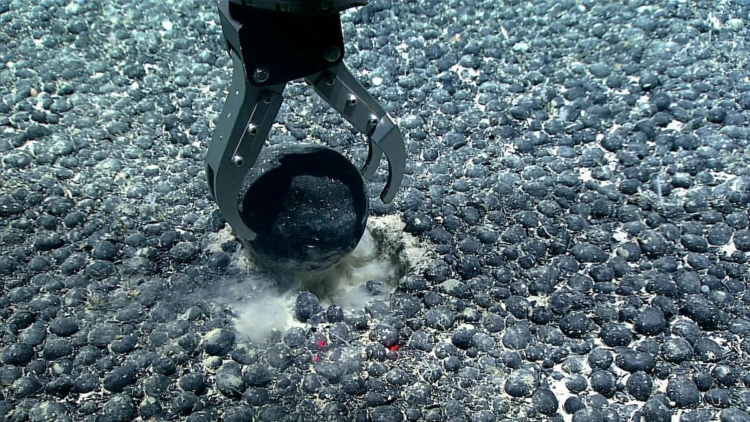
The production of this dark oxygen surprised the scientist even more, as it was developing thanks to the natural formation of metallic nodules, structures rich in minerals such as cobalt, nickel and lithium.
Natural batteries at the bottom of the sea
That’s right, these nodules act as natural batteries and split water into oxygen and hydrogen (through a process called underwater electrolysis). After studying this process in laboratories, they revealed that the energy generated by this process is comparable to that of typical AA batteries. Isn’t that fascinating?
And although this process is fascinating to the scientific community, it is a power that is below the limit necessary for the electrolysis of ocean water, but it raises many questions to the community about the role of the nodules in sustaining life in the deep sea.
Is it bad for the ecosystem?
This fact puts deep-sea mining (the extraction of minerals and metals from the ocean floor) in the spotlight of the debate. This activity is focused on areas where deposits rich in materials such as cobalt, nickel, copper, manganese and rare earths have formed, just the same characteristics as the Clarion-Clipperton Zone. Scientists have asked for discretion because this activity (underwater mining) could alter the natural balance of the ocean by destroying habitats and the biodiversity of these unknown areas.
Thus, more than 800 scientists from 44 different countries have asked through a statement that deep-sea mining be suspended.
Sweetman points out that before considering the economic sector, one should take into account the effect on oxygen generation, as miners before 1980 already caused damage to marine life that is still visible today.
This discovery only makes it clear that our oceans are mysteries that resist being discovered, there are so many things we still don’t know about them! But, we cannot allow the biodiversity of our oceans to be lost due to commercial activities.