
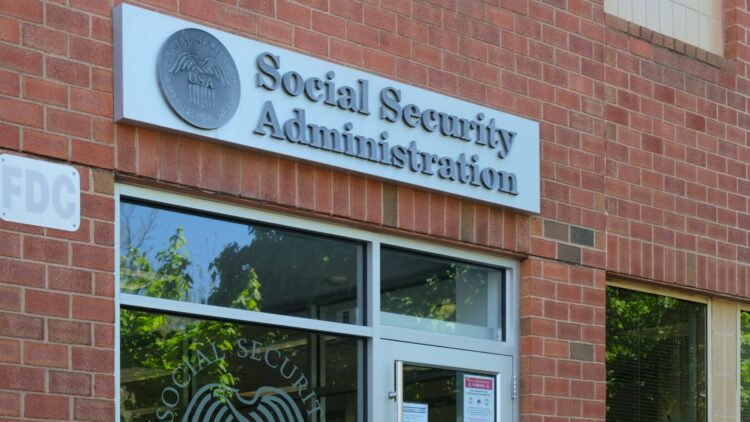
Every month, the Social Security Administration (SSA) issues millions of payments to its more than 70 million beneficiaries. Spread across five programs, most are retired workers, recipients of Social Security Disability Insurance (SSDI) and Supplemental Security Income (SSI), but there are also recipients of Family and Survivor Benefits.
Most of these benefits have very strict requirements to access and some of them require recipients to be nationals. But SSI, which is geared towards adults over 65 years of age and people with certain disabilities with limited income or resources, regardless of their age can also be accessed by immigrants.
It is important to know the specific of the programs, as, since SSI is subsidized by the government, beneficiaries can request payment without having made contributions to the Social Security program, that is, without having worked. According to the SSA, non-citizens may be eligible for SSI payments thanks to the “7-year rule,” which means that if you fall under the conditions to access the program you should pay attention as you may be eligible to get this benefit.
The 7-year rule for immigrants in the US who want to receive Social Security payments
The seven-year rule allows immigrants to receive Social Security benefits, specifically SSI, during that period of time, but as the name of the rule suggests, these benefits are limited to seven years due to the immigration status of the person requesting them. To be eligible for payments, the immigrant must fall into one of the following classifications granted by the Department of Homeland Security (DHS), according to official information from the SSA:
- Was legally admitted for permanent residence
- Was granted conditional entry or asylum
- Is on parole in the United States
- Was admitted as a refugee
- Is an alien whose removal is being withheld
- Is a Cuban or Haitian entrant
- Was admitted as an Amerasian immigrant
- Was admitted as an Afghan or Iraqi special immigrant
- Was admitted as an Afghan humanitarian parolee, or as an Afghan non-special immigrant parolee
Was admitted as a Ukrainian humanitarian paroleeAs long as one of those of requirements is met, you can receive benefits, but you also must meet one of the additional requirements:
- Was legally living in the United States on August 22, 1996, and is blind or has developed a disability
- Was receiving SSI benefits on August 22, 1996, and is legally living in the United States
- Was legally admitted for permanent residence, and have a total of 40 U.S. work credits (your spouse’s or parents’ work may also count)
- You are a veteran or active duty member of the U.S. armed forces, or the spouse or dependent of a veteran or active duty member of the U.S. armed forces
- You are an American Indian born in Canada
- You are a non-citizen member of a federally recognized Indian tribe
- You are a victim of severe human trafficking
These requirements will be verified by the SSA before granting any kind of benefit, so be sure to provide enough proof when asking for the payments. Once the seven-year period is about to end, the recipient will receive a letter from Social Security informing them of the exact date their benefit ends, but since the rule is so clear about the timing, there should be ample time for those receiving the payments to make further arrangements that would improve their situation, as SSI is not meant to be a payment forever, just a stepping stone. While receiving the money you should use the time to speed up the processing of your pending petition for naturalization (Form N-400) or application to adjust your immigration status (Form I-485) and use the fact that you are receiving assistance to waive the fees associated with filing these applications.