
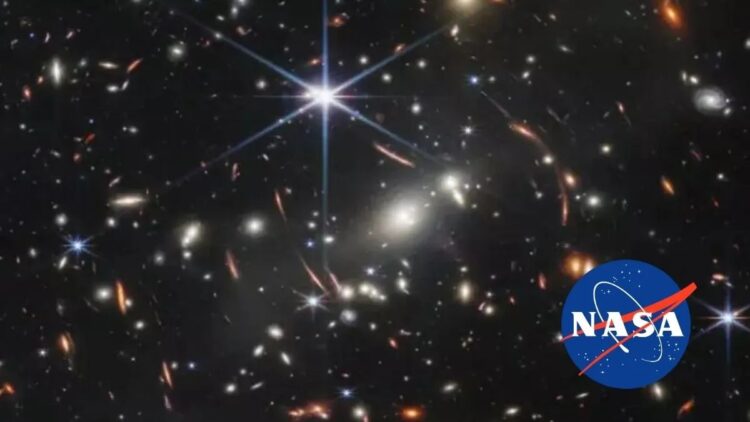
The universe is a wonderful place, and it hides millions of mysteries in every corner. It’s like playing tag with it. The more we try to learn about it, the further away we are from knowing the truth, or at least that’s what it seems. But every so often, NASA finds something that leaves them completely baffled. The latest is that they have found a space object that travels at more than 1.6 million km/h and that is imminently approaching our solar system.
This strange celestial body has been named CWISE J1249, and it weighs 30,000 times more than the Earth. Its origin remains an enigma for the scientific community, some believe it may be a failed star (a brown dwarf as it is called) while others believe it was launched at full speed from a stellar explosion or a black hole.
What do we know about CWISE J1249?
For now, all we know is that it is unusually fast and has a very different composition than what is known today, and was detected thanks to NASA’s “Backyard Worlds: Planet 9”, where citizens are being asked to help interpret images taken by the Wide-field Infrared Explorer (WISE) and NEOWISE, and it was three volunteers, Martin Kabatnik, Thomas P. Bickle and Dan Caselden, who discovered that something was moving surprisingly fast.
The most curious thing about this discovery is that this object does not behave like a normal star, because it is not big enough to light up like a sun, but its speed and trajectory indicate that it suffered an extreme event in the past that makes it move at that speed. Isn’t it incredible?!
Where does it come from and why is it moving so fast?
Many astronomers have developed two hypotheses as to why this mass may have reached such a speed. As we said at the beginning of the article, it has characteristics that puzzle astronomers, and that is that it is either a low-mass star or a brown dwarf (a celestial body that has more mass than a planet but not enough for continuous nuclear fusion). Another thing that has puzzled the astronomers in charge is that its composition does not match that of the 4,000 known brown dwarfs… So what?
One of the possibilities they discuss is that this fast-moving mass was part of one of the first stars that were generated in our galaxy, something like a relic of the primitive cosmos, so that if it were a white dwarf, the shock wave could have expelled J1249 into the void with a force that made it reach our system.
Another theory states that J1249 could have been born from a cluster of stars, basically that there was an interaction between black holes that launched J1249 at great speed as if it were a cosmic slingshot.
Kyle Kremer, a professor of astrophysics at UC San Diego, explained that when a star is captured in a binary black hole system, this could result in that star being ejected directly from the globular cluster.
Does CWISE J1249 pose any danger to Earth?
For now, there is no sign that this object will hit Earth. It is 400 light years away, so it is quite far away (still), but its discovery has made us know a little bit more about the universe we inhabit and how stars move (and how catastrophic events can launch them at such high speed!). For now, we can only wait for NASA telescopes to continue investigating this stellar traveller. Who knows, maybe it will help us discover new rules about how space works! Yet another astronomical discovery that leaves us perplexed!