
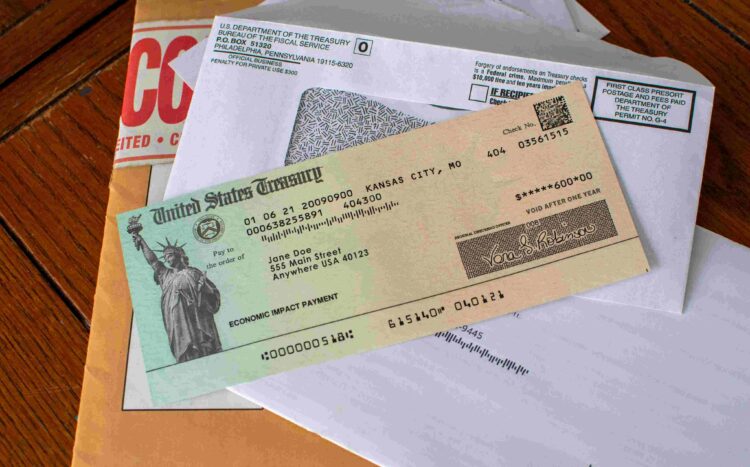
Tax season is here and with it, scammers are on the prowl. Unfortunately, scams related to stimulus checks are on trend. That’s why the Internal Revenue Service (IRS) has issued a very urgent warning about a new wave of fraud related to $1,400 stimulus checks. If you are a beneficiary of this type of check, it is very important that you stay updated and informed only through official government channels.
Who receives these types of checks?
Mostly people from vulnerable sectors of the population. That’s why scammers take advantage of their desperation so that they are an easy target to deceive and take advantage of.
How do these scammers work?
Very simple and with a technique that we all know: scammers send fake text messages and emails pretending to be from the IRS and requesting personal information in order to “process the payment.”
The messages sent are phishing messages, and they look a lot like this:
“You are eligible to receive a $1,400 economic stimulus payment. To claim it, confirm your banking information and mailing address. The deposit will be made in 1 to 2 business days.”
However, the links are fraudulent and, even they look like official websites, they are created to steal your data.
Are scams common?
The IRS had already announced on January 27 that this could happen, and the fact is that, as soon as tax season opens, there is always an increase in scams during that period. The reality is that it is very “easy” to impersonate a federal agency at this time because it makes it less suspicious, and in this way, they can take advantage of the most vulnerable people and their desperation.
In this case, and as we mentioned before, the type of scam they use is “phishing”, where attackers, through text messages or links, impersonate organizations so that they end up disclosing their confidential information.
What stimulus payment is the scam referring to?
These $1,400 dollars we are talking about are 2021 recovery rebate credits, meaning that those people who did not claim their tax refund in that year or during the pandemic could still receive it. However, one thing you should know is that if you qualify for this payment, it is made automatically because the IRS has your data from those years, so taxpayers do not have to request anything at all to receive it.
Is there a way to protect yourself from phishing?
Not only because you can get this type of scam during tax season, but because you can be exposed to these scams at any time (perhaps through a phone call or a fraudulent letter, not necessarily a text message or an email), so, these tips that we are going to give you will be useful, unfortunately, for other situations.
- Do not click on suspicious links: if you receive a message about a stimulus check, do not click on any link. The IRS will never ask for personal information through these means.
- Verify the source of the communication
- The IRS does not call or send emails requesting banking information. If you have doubts, go directly to the official IRS website at www.irs.gov.
- Do not share your personal information if someone calls or sends you a message asking for your Social Security number, banking details or personal data, hang up and report it to the IRS. 4. The IRS never threatens arrest, immediate fines or legal consequences if you don’t provide personal information. If someone pressures you, it’s a scam.
- Report any attempted fraud
If you receive a suspicious message, report it directly to the IRS at the official website www.irs.gov/phishing or by forwarding it to phishing@irs.gov.
Additionally, the IRS lists the following potential scams:
- Charity impersonators
- Misinformation about credits and refunds
- Disaster fraud
- Tax debt relief or settlement services
- Unclaimed tax refund
- Unemployment reports identity theft
- Unexpected tax bill
- W-2 fraud
Let’s make sure that, together, we stop these undesirables who feed on the needs of others!