
For centuries, and as long as humans have been conscious, humanity has tried to answer a basic question on everyone’s mind: what exactly is life?
A question that, clearly, has never had a logical or clear answer because none of us know what we are doing “here.” Now, a group of scientists has presented a new theory that redefines it as a system of machines that produce machines, challenging our traditional understanding of living organisms.
These are the researchers from the Ulsan National University of Science and Technology (UNIST) in South Korea and the Rockefeller University in New York who have developed a conceptual framework that describes life as an infinite cascade of self-replicating structures, from the molecular level to entire ecosystems. We tell you everything we know of this discovery.
Living machines?
The theory put forward by professors Tsvi Tlusty and Albert Libchaber is inspired by the work of 17th-century philosopher Gottfried Leibniz, who claimed that “living bodies are machines even in their smallest parts.” Following this line of thinking, researchers have developed a simplified way of describing life as a series of interconnected automatic processes.
So, can they define life?
We can understand life as a structure organized at different levels, from cells (the basic units) to the great network of life that exists on Earth.
If we look at the smallest, inside each cell there are microscopic structures that function like gears in a machine. These include ion pumps (which regulate the passage of substances in and out of the cell) and enzymes (which accelerate chemical reactions necessary for life). All this happens at the atomic level, that is, at the tiniest scale of matter.
On the other hand, if we look at the largest, cells do not work in isolation. They group and organize themselves to form tissues (such as muscles or skin), then these tissues create organs (such as the heart or liver), and these organs work together in systems (such as the digestive or respiratory systems). Isn’t it incredible?
A revolutionary theory
One of the most interesting aspects of this theory is the identification of a critical point at which self-replicating “machines” interact with their environment. According to the researchers, this point occurs at a scale of 1,000 seconds and 1 micron, a reference that corresponds to the conditions of microbial life. At this threshold, unicellular organisms reach the minimum capacity to reproduce and generate more complex living systems.
Does this help to understand the origin of life?
Yes, let’s keep in mind that they would be defining life as a “cascade” of machines that self-replicate and group together, so it could be much easier to identify what the necessary conditions are for this same pattern to be reproduced in other environments, as well as other planets, who knows, or even create artificial systems.
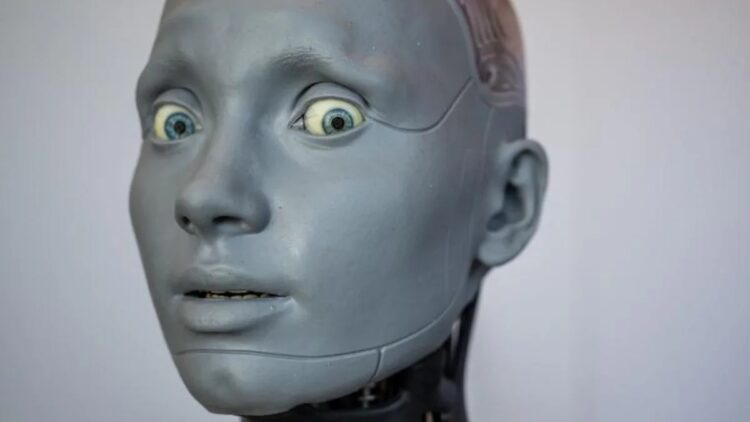
So, this would raise other even more complex debates, ethically speaking, because if living organisms can be seen as automatic systems, could they make an unprecedented development in artificial intelligence and robotics?
The creation of machines capable of self-replication and evolution could bring us closer to a point where the differences between biological life and artificial life are increasingly blurred.
As science advances, the line between organic and artificial could become thinner. This theory not only challenges our traditional definition of life, but also opens the way to