
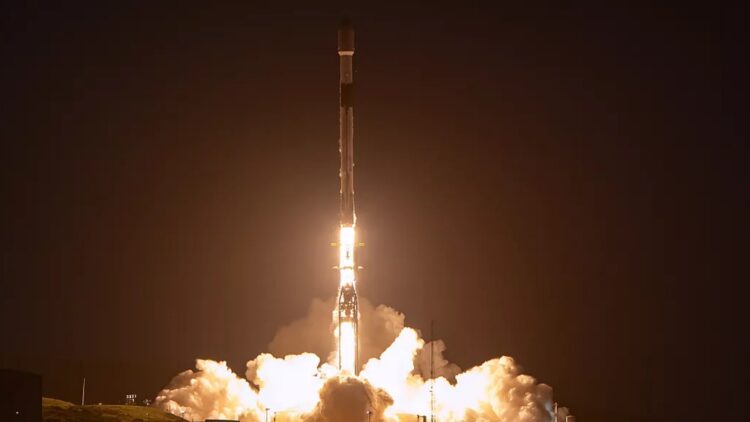
SpaceX has once again been the centre of attention in all the media, but this time it was not for anything good… on November 18, 2023, SpaceX staged an unexpected event that captured the attention of the entire scientific community and the entire world. They had planned a space launch, called Starship, everyone was very excited and many people looked to the sky to see it… Well, the ship exploded just four minutes after taking off from the Boca Chica platform in Texas.
What is SpaceX?
Also known as Space Exploration Technologies Corp., it is an aerospace company founded in 2002 by Elon Musk, whose goal is to make space travel possible (and dreaming very, very big, to travel to Mars and colonize it).
It is one of the most innovative companies in the space sector because it also promises reusable rockets (a Falcon 9 that can be used again once landed to reduce launch costs), and it also aims to have commercial and government launches (such as supplies for NASA).
It is something more than a space agency like NASA because it aims to make space travel available to everyone (who has and can afford it, of course).
What about this spacial trip?
Specifically, this event (which occurred about 93 miles from the surface of the earth) has revealed something that has never been investigated before in space flights: do they harm the Earth’s ionosphere?
What is the ionosphere?
The ionosphere is one of the layers of the Earth’s atmosphere located between 50 and 400 kilometres of altitude. It is important because it is composed of electrically charged particles, which allow the transmission of radio frequencies and GPS, in addition to protecting us from potentially dangerous solar radiation, therefore, it is one of the phases of our protective shield.
When natural events occur such as geomagnetic storms, for example, the ionosphere suffers quite a bit.
Apparently, with the explosion of this rocket, a kind of “hole” was created in the ionosphere over the Yucatan peninsula (in the southeast of the United States).
Although it wasn’t one of the best days in SpaceX’s history, the research teams felt that day as the day of Santa’s arrival, because they were able to analyze up to 2,500 ground stations and ended up confirming that the Starship explosion caused a significant decrease in the concentration of electrons in the ionosphere! They ended up calling this phenomenon “total electron content depletion” (a phenomenon that can affect the propagation of radio signals and the precision of navigation systems).
Was it more damaging than other launches?
It was not more damaging than other launches, but the impact of this Falcon 9 lasted longer, this hole lasted for approximately 40 minutes, but don’t worry, it is not the size of the famous hole in the ozone layer and it did not stay there forever, after those 40 minutes it returned to its original shape.
The debate is served after this investigation: what would happen if these explosions or these exits into space became much more frequent? Would we be destroying the layer of the atmosphere that allows us to live?
And above all, is there any way to reduce the impact of the aerospace industry in these cases?
We must never forget that our ambitions must take into account that we do not live alone on the planet, and that any action we take can have a negative impact on our future and the future of our offspring. What kind of world we want to leave for our children should be one of the main questions we ask ourselves whenever actions like this occur.