
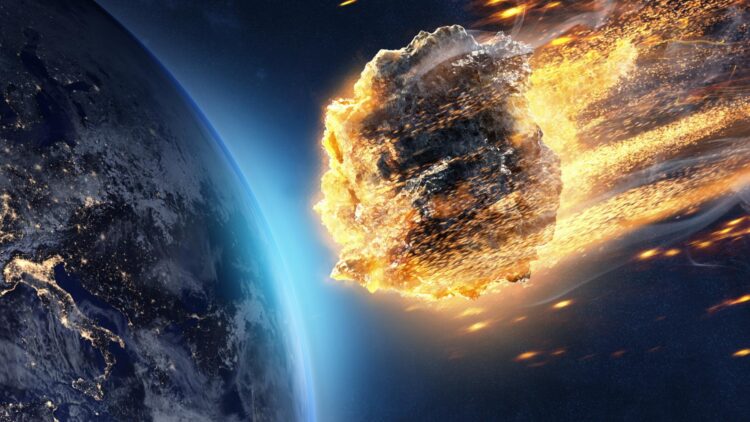
It seems like science fiction straight out of a Hollywood movie, but NASA has been keeping a close eye on space. Do you want to know why? Apparently, the Asteroid Terrestrial Last Impact Alert System (ATLAS) has warned of 2024 YR4, an asteroid that, when it was discovered, was not believed to be of any importance, but now it has set off all the alarms at NASA.
The Space Administration has classified it as a NEO (near-Earth object) and its main reason is that it is now on a worrying trajectory.
What is 2024 YR4?
Its size, speed and proximity have made it a priority for scientists, since, according to initial calculations, there is a 2.3% chance that it will hit Earth in December 2032. The percentage may not seem very high, but when it comes to space bodies, any real possibility of impact is a reason for immediate study.
For this purpose, the James Space Telescope has been selected to collect data on the composition and size of this body wandering through space, in order to be able to observe it correctly before it is too late (because it is estimated that it will collide with Earth in 2032!!)
Why are scientists worried?
Let’s keep in mind that this asteroid was detected in 2024, and although its exact size is not known, estimates indicate that it could measure between 40 and 90 meters in diameter (more or less the same as the Tower of Pisa or even bigger!!) and of course, 10 metres is not the same as 90, and of course, even if it is small, if it were to hit our planet it could have important consequences in the place where it falls.
What is the James Webb doing?
The JWST is ready for this task, especially because of the infrared that this telescope has, which can capture the heat emitted by this asteroid, so researchers can specify the real dimensions of this space rock (and also its surface composition)
By observing it through the JWST, researchers will be able to decide how to act in the face of this threat (and if it is a real threat or will it simply pass by)
What questions will researchers be asking themselves and when will they start observing it?
From March 2025, our scientists will continue to observe how this asteroid moves through space. The next observation will be in May 2025 and they will check whether its course has changed or its speed has changed. After that date, it will be very difficult to observe it again until 2028 because it will be too far from Earth.
The main questions our astronomers will be asking themselves are:
- Is the asteroid solid or made of loose debris?
- Is it a light-reflecting object or a dark object?
- What is its exact trajectory and what are the chances of a real impact in 2032?
Is the Earth in real danger?
For now, we don’t know. Approximately 340 observations have been made with telescopes to predict their trajectory, but the speed and the possibility of impact can vary because these types of space objects are unpredictable.
There is a lot of good news. The first is that our planet is full of desert areas and water, so the probability that if an asteroid falls, it will fall in an unpopulated area is quite high. On the other hand, researchers assure that this year the threat of impact will be ruled out.
What if we were in danger?
Don’t panic! NASA and researchers have ways to make space objects not directly impact our planet. On the one hand, they can make detonations to divert the course or directly try to undo it before it hits the Earth. Whatever the case, we are not going to suffer an extinction like that of the dinosaurs!