
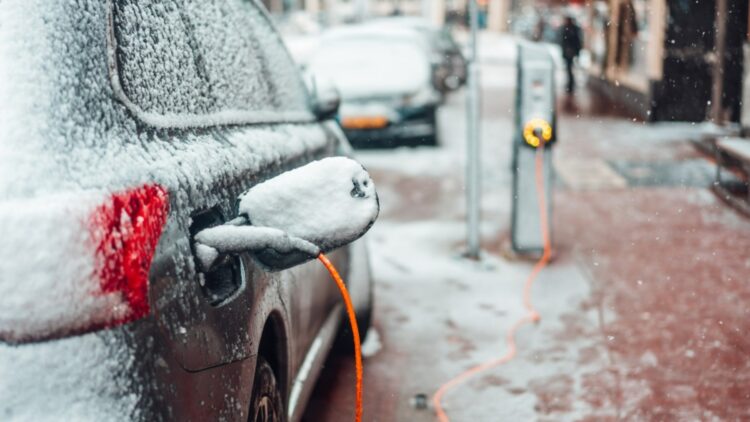
Electric vehicles have revolutionised everything we know about mobility, they have offered a very ecological alternative to traditional combustion vehicles, and they paint a clean and energy-efficient future, but do they still face problems? Of course, and one of them may only be noticed at a certain time of the year because it is the cold! So, as you read, extreme cold could reduce the range of your EV by up to 50%. Obviously, this is something that frustrates many drivers (especially those who live in regions with difficult winters). So, many manufacturers are fighting to prevent this from happening or at least to a lesser extent, but… what exactly are they doing?
Why does the cold affect EVs so much?
As you may know, EVs rely entirely on batteries to maintain interior temperature (unlike conventional cars that use engine heat to warm the passenger compartment), so in cold climates, energy is used not only to move the car, but also to heat the cabin. You know where this is going, right?
On top of that, the cold causes the liquid inside lithium-ion batteries to thicken, making the flow of ions much more complicated and slower, which causes a reduction in charge, in other words, the cold discharges more than half of the battery’s capacity.
One of the latest studies from Consumer Reports found that all-wheel drive electric vehicles lose up to 25% of their range when driven in cold weather at 70 mph, and even worse on short trips because the car will have to re-warm up after each stop… This of course is a point against electric vehicles and a point in favour of conventional vehicles because they do not rely on battery power for both vehicle propulsion and climate control…
Are solutions being explored?
Of course, we must bear in mind that it is not a very good reputation to say that our vehicle loses battery in the cold, so companies that work with electric vehicles are already working to develop systems that minimize the loss of autonomy in cold climates. The main problem is that, although they seem promising, they still have the problem of profitability…
On the one hand, one of the solutions that is being investigated is heat pump technologies that, unlike common resistance heaters, extract heat from the air (and use it to heat the vehicle), but like everything, the drawback of these pumps is that they cannot be installed in older vehicles.
Other companies are using propane-powered heat pumps, this system is called TherMas and is being implemented by the German company ZF. With this system, it is estimated that the autonomy of vehicles can increase up to 30% in extremely cold temperatures. TherMas integrates a sealed mini-refrigerator in its core and uses a fluorine-free propane refrigerant to make it environmentally friendly, and the best thing is that it may be available as early as 2026 (although there is still a long way to go…)
And do solid-state batteries exist?
Manufacturers are working on this and are investing in solid-state batteries, which instead of using liquid electrolytes (which thicken in the cold), use solid materials that are not affected by temperature.
Toyota has announced that it could launch its first EV with solid-state batteries in 2027, with ranges of up to 1,200 km and full charges in just 10 minutes. Volkswagen is also developing prototypes that could increase range by 80%.
Can we improve autonomy in any way?
Yes, by following some basic recommendations such as preheating the car while it is plugged in, using heated seats and steering wheels, and planning routes considering longer charging times in winter