
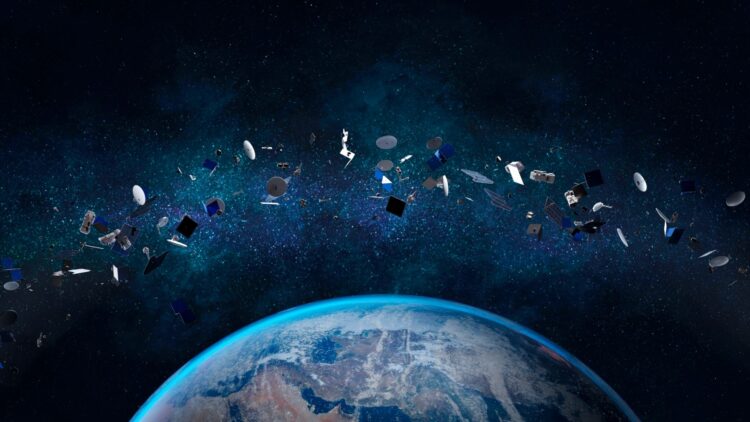
Have you ever stopped to think that maybe you’re the genius NASA is looking for? Since humans discovered they could go beyond the atmosphere, not only have they left their mark on their discoveries, as they did with the moon, but they’ve also been leaving debris and waste generated by them in space. Yes, we’re also great at polluting a space that isn’t “ours.” NASA, of course, isn’t at all happy about littering space, so it’s launched the LunaRecycle Challenge, a kind of contest for the most gifted minds who can come up with an innovative solution that allows recycling space waste while spending the least amount of money. And don’t mess around, the prize will be $3 million for the winner. We bet you’re thinking about it too?
Why is managing space debris so important?
It’s not because they’ve become environmentalists, of course not, but because the existing debris in space has become a problem for future explorations. Keep in mind that in space right now there’s “everything from decommissioned satellites, rocket fragments, lost tools… All this debris (large, by the way) maybe means future astronauts can have chain collisions and make space inaccessible because they (the debris) continue to orbit the Earth (because of our gravity and all that), and this is known as Kessler Syndrome.
On February 28, an incident almost confirmed this risk. An out-of-control Russian satellite, Cosmos 2221, nearly collided with the American satellite Timed, jeopardizing research into the Earth’s atmosphere. Such an impact could generate a cloud of debris traveling at 16,000 km/h, causing irreparable damage to other space missions, so a solution is urgently needed.
How does the competition work?
The LunarRecycle Challenge is simple and involves only two types of work.
The first is the physical prototype, which is based on designing and developing systems capable of recycling waste on the lunar surface. In other words, it involves collecting, reducing, and processing waste that will be useful for future missions to the Moon and Mars (so that resupplying from Earth is not required).
The second task is the creation of digital twins. What does this mean? It involves creating virtual replicas of complete recycling systems, allowing their feasibility to be assessed before physically building them.
What’s the deadline?
Participants can submit their ideas until March 31, 2025, the day the first phase of the competition ends. The results of this first phase will be announced in May. Hurry, because time’s running out! Those interested in registering must complete the LunaRecycle Challenge Expression of Interest form. Proposals submitted by email will not be accepted, although the organizers have set up two email addresses for official inquiries.
The proposal is clear: we must clean up space. It’s clear that ingenuity and creativity, as well as functionality, will be the key weapons to take this challenge home.
This challenge marks a milestone in the fight to make space a safer and more sustainable environment. If we want to go far in exploring the universe, we must first learn to manage the waste we leave behind. So, we might as well put this into practice on Earth, which, unfortunately, is lacking!