
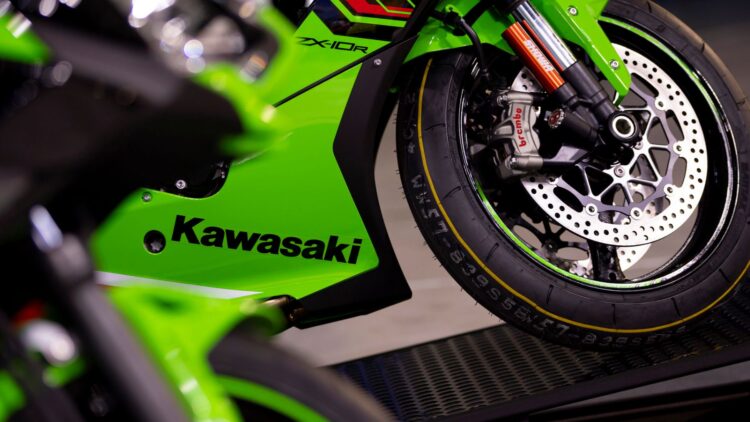
In the world of motors, the fight to be the centre of attention never stops. Some debate between gasoline or electricity, but Japan wants to take its own path and break away from this fight. Although electric engines have been stealing the show in recent years, there’s still a lot to improve before they dominate the streets, so the race to be more innovative is still alive. Now, Kawasaki is researching how to need neither plugs nor gasoline with its new motorcycles, and we can already tell you that they roar as if a new era were coming to the roads (or isn’t it?).
This motorcycle is still in the development phase, but it’s aiming high and directly at today’s environmental problem: moving around without polluting, and yes, we are talking, of course, about hydrogen technology, which many companies have flirted with in recent years as well. The alternative is clear: hydrogen fuel cells to counteract the effects of internal combustion and, little by little, manage to make conventional energy disappear, but now Kawasaki wants to change the future.
Clean energy on two wheels
As we said, the market needs renewal, and Kawasaki wants to be the first company in the world to power its motorcycles with hydrogen. It’s no secret to anyone that Japan leads part of this market with its vehicles, and that its vehicles are the most innovative and best prepared for the future with, for example, Toyota models, which are always at the forefront of the market.
Now, Kawasaki has presented a prototype called “Ninja H2,” an absolute madness of a vehicle that, if all goes well, we’ll see on the roads starting in 2030.
How do hydrogen engines work?
Very easily: just as gasoline engines work by burning diesel, and electric ones with lithium batteries, hydrogen engines work with hydrogen fuel cells. A technology that, through a chemical reaction between hydrogen and oxygen, manages to make any engine roar like a true lion in the jungle. And the best thing is not only that they have potential that leaves us speechless, but that in terms of pollution, they are practically null because their “residue” is not polluting gas but water vapor, thus becoming an attractive alternative for all those looking for a truly clean option.
A historic collaboration
The team behind this Ninja H2 is what surprises the most about this news. For the first time, Honda, Yamaha, Suzuki, and Kawasaki, the great rivals of Japanese motorcycling, have joined forces to carry out this project, and this only shows that the future of our planet goes far beyond the competition that may exist between these brands.
Why hydrogen?
It’s not new in the motor world, but it is very difficult to implement on a large scale since storing and transporting it is quite complicated. It requires high-pressure tanks, fairly complex fuel cell technologies… in short, the initial investment cost is very high, and for now, there aren’t many companies ready to make that leap.
But despite all this, hydrogen has so many advantages: it refuels quickly, has much more autonomy, and best of all: it doesn’t pollute. It’s the real competitor of traditional fuels, and Japan is no novice when it comes to hydrogen, it’s been betting heavily on it for years. What could go wrong now?
What is Kawasaki proposing?
Beyond innovating, it proposes that its vehicles not lose the magic they’ve had until now: the roar, the autonomy, to continue having their ambition and same power, only with a much more sustainable vision.
What’s missing for hydrogen to work?
Willpower. And not willpower from buyers or companies, but political and state will and incentives so that there are more refuelling stations, clear regulations regarding its use, and much more motivation for the sale of these vehicles, because without the collaboration of all sectors of society, we won’t be able to reach a clean future.
The transition has arrived, and luckily, there are still many players on the board. Hydrogen is nothing more than another attempt to build a clean future for everyone and rethink the way we move. The Ninja H2 is a true declaration of intent that, if it can be done, it will, clearly.