
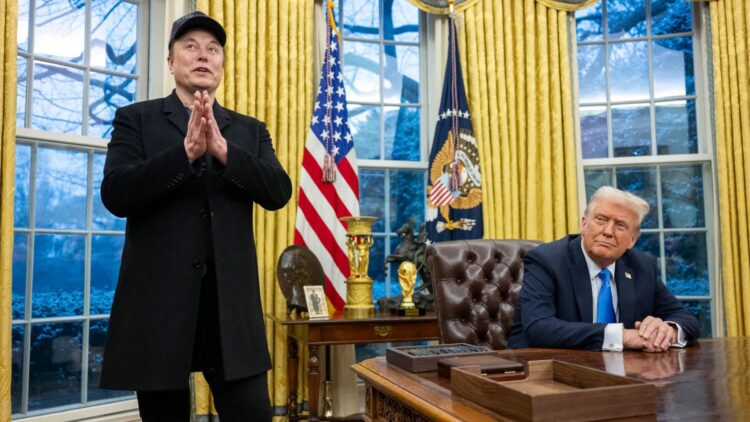
Trump’s return to the White House has been an upheaval, and we well know that one of his main goals this term is to reduce public spending in every possible way. They are already scrutinizing Social Security expenses and implementing reforms over the past few weeks, but the DOGE (Department of Government Efficiency), led by Elon Musk, has surprised the world by cancelling more than 200,000 government credit cards (that is, credit cards used with public money by federal employees). As we already know, Musk is not afraid to challenge anyone, and this has been a very forceful order, as it has been until now. The tycoon has made his working style clear: direct, disruptive, and unfiltered, and with this measure, he has not only paused thousands of transactions, but has ignited a debate that will be much talked about. Can public spending be cut without endangering the functioning of the government? We’ll tell you.
Personal crusades for administrative efficiency
At first glance, it may seem like a logical step toward a more efficient administration than the one we have now, but the measure has triggered alarms in federal agencies, where the consequences of this freeze in operational funds are already being strongly felt.
On February 18, Musk announced that DOGE would collaborate with various agencies to simplify government accounts and cut management costs, but no one expected this change. According to official data, in 2024 more than 90 million transactions were recorded linked to the 4.6 million credit cards issued by the federal government, necessity or waste?
It’s no secret that Trump also wants to overhaul the public system and, of course, has backed this measure: a 30-day freeze on all U.S. federal staff credit cards, which he has called the “DOGE Efficiency Initiative.”
What’s happening in the agencies?
Although some departments like Health and Human Services or the Interior have managed to cope with the situation, other entities are still suffering the consequences of this test period. The FDA (Food and Drug Administration), for example, has had difficulties requesting and acquiring essential laboratory supplies. And that, in an agency responsible for protecting public health, is no small matter because what they try to do is ensure consumer safety, something mandatory, of course, for an agency that aims to safeguard public health.
$1 travel card limit
In other cases, civilian employees of the Department of Defense were notified that their travel cards would have a limit of only $1. Although exceptions were made for expenses linked to military operations, other agencies also received similar restrictions, making basic daily operations difficult.
While many users believe that the freeze is one step closer to real fiscal responsibility, it has raised concerns about the operation of these federal administrations, especially the question of whether the SSA (Social Security Administration) will continue to carry out its work as before or not.
Real savings or poor improvisation?
From Musk and Trump’s point of view, this plan is an opportunity to reduce the “historic waste” of the federal apparatus. For them, eliminating cards, restricting expenses, and controlling transactions is the first step toward a more agile, transparent, and functional system. But critics are not on their side, many argue that these measures will ultimately weaken the agencies significantly, especially in areas like healthcare, security, or research, where resources must be immediate and constant.
Trial period
Yes, one thing is clear: this project is in a trial phase and, for now, has audited 16 agencies, but it is expected to expand to other entities in the coming weeks. Musk insists that this is only the beginning of a deep restructuring. But the big question remains: how much can be cut without affecting the backbone of public service? And above all, what do the citizens think? One thing is to control spending, but are we sacrificing collective well-being?