
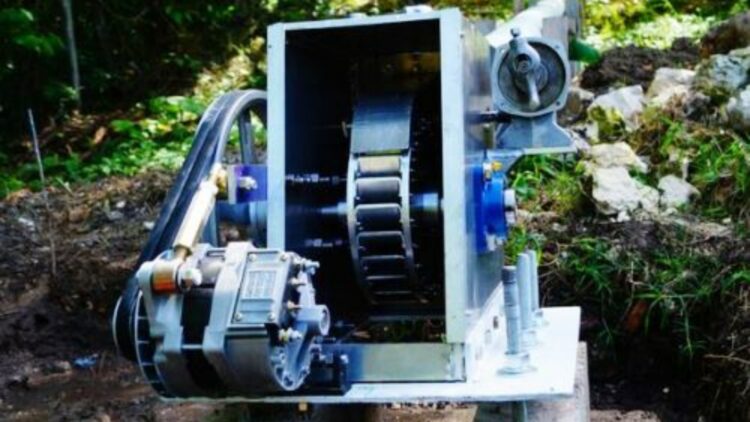
The price of electricity keeps rising, and with it, so does climate change. In this context, both users and companies are being forced to rethink our consumption habits, right? And it’s not that companies now want to be more eco-friendly than anyone else, it’s that it’s necessary for all of us to rethink the way we consume electricity. Now, the United States has introduced a new solution: micro-hydroelectric energy. That’s right, a stream of water could be all you need to generate electricity at home 24 hours a day. What does this type of energy promise? Saving on your energy bill and taking care of the environment, it’s that simple! Want to know how it works? We’ll tell you below.
What is micro-hydroelectric energy?
It’s a form of renewable energy that uses the natural flow of water to generate electricity on a small scale, but without using large hydroelectric dams, rather, through small turbines that harness the force of moving water.
This type of energy is clean, constant, and silent. And best of all: it can be installed at home without taking up much space.
How does it work?
Through small turbines that are activated by the flow of water, and yes, their movement, even if small, generates energy that can power an entire household. Their production range is surprisingly broad, from 100 watts to 100 kilowatts (obviously, depending on the flow and the design of the system).
And the best part is that these systems are designed for water currents that are not particularly large, like streams or natural surroundings, so many families will be able to become independent from electric companies and produce their own energy with zero environmental impact.
Clean and constant energy
Unlike solar panels, which don’t work very well when the day is cloudy, or wind turbines that depend on weather, this device’s energy can offer a constant supply 24 hours a day (as long as the water flow is stable, of course).
Does this new system have advantages?
Of course it does! Starting with the fact that it emits no pollutants, making it a sustainable alternative for household electricity. Also, it’s not a typical turbine that could generate waste or destroy ecosystems where these turbines are installed, nothing like traditional turbines that do damage the ecosystem.
And are there no disadvantages?
The only disadvantage we can mention is that the initial installation cost is high, but these systems end up being much more economical, meaning that in the long run, the investment is worth it. Keep in mind that with one of these devices, you’ll be generating your own electricity and also reducing your dependence on external companies… and no one will be able to raise your electricity bill! We know that last part won you over…
What about pollutant gases?
There aren’t any! Just like there’s no waste, and since it only requires the movement of water, it’s a more than valid option for those who want to reduce their impact on the planet, also showing that energy self-sufficiency is possible and that many people are going for it!
How do I know if I can install it at home?
Very simple, first, you’ll need to confirm that you have stable access to water that flows constantly (if it’s a stream that sometimes dries up, it won’t work). We need a river that has a constant water flow, since droughts or seasonal changes can affect this system’s performance, so it’s very important to study the environment carefully.
On the other hand, although these installations are less invasive than other infrastructures, it’s necessary and mandatory to comply with environmental regulations and obtain the relevant local permits for installation.
Infinite (and clean) energy is getting closer. More and more homes in the United States are opting for this type of clean energy. Oregon, Colorado, and Vermont are already developing their own support networks to promote this natural energy. Are we truly entering the era of clean energy?