
The European Space Agency is finally going to check if Einstein was right. In April 2025, it will send two ultra-precise atomic clocks to the International Space Station with one goal: to demonstrate if time changes as we move away from Earth’s gravitational field, as predicted by the theory of general relativity. The mission is called ACES and has been in the works for over 30 years. If all goes well, we could be facing one of the most important discoveries for modern physics.
Because this is not just a theoretical matter. If the data confirms the prediction, we could improve everything from GPS systems to our understanding of dark matter. But let’s start from the beginning; here’s what we know about this.
Decades preparing a mission to measure time
ACES (which is what this facility is called) stands for Atomic Clock Ensemble in Space, and it’s no ordinary mission. It has taken over thirty years to develop, and if all goes according to plan, it will launch on April 21, 2025, from the Kennedy Space Center aboard a SpaceX Dragon capsule as part of the CRS-32 resupply mission.
Its destination will be the European Columbus module of the ISS. There, it will operate for at least 30 months, measuring with unprecedented precision whether time passes faster or slower in microgravity. What will happen?
Why are two clocks travelling?
Because one isn’t enough. The ACES mission carries two different clocks that complement each other to achieve the highest possible precision: PHARAO and SHM.
PHARAO: cooling atoms with lasers to nearly absolute zero
PHARAO (Projet d’Horloge Atomique à Refroidissement d’Atomes en Orbite) is an atomic clock developed by the French space agency. It uses cesium atoms cooled with lasers to temperatures close to absolute zero (-273ºC). In microgravity, these atoms float for longer and allow much more precise measurements than on Earth.
SHM: Swiss precision in orbit
On the other hand, SHM (Space Hydrogen Maser) has been made in Switzerland and uses hydrogen atoms as a reference. Its strength is short-term stability, ideal for calibrating small changes in PHARAO. Together, they achieve impressive precision: one second of error every 300 million years.
Why is so much precision needed?
To measure something that until now had only been confirmed on a small scale: gravitational time dilation. According to Einstein, time slows down the stronger the gravitational field. A clock at sea level should run slower than one at the top of a mountain. This has already been demonstrated here on Earth, but now they want to look upwards and confirm it on a large scale.
What ACES will do is repeat the experiment, but from space, 400 kilometres up. It will compare its clocks with others on ground stations. If time behaves as Einstein predicted, the data will make it clear.
What if Einstein was right?
If the results confirm the theory, not only will what we already know about relativity be reinforced, but it will also open new doors to:
- Improve GPS systems
- Detect potential fluctuations in the fundamental constants of the universe
- Obtain key data to help understand dark matter (one of the great mysteries of physics)
And if that happens, we will be one step closer to understanding what happens and how things really work up there.
A European mission with global support
The mission has been developed by the ESA, with participation from research centres in France, Germany, and Switzerland. Airbus has been responsible for the assembly, and SpaceX will handle the launch, a combination that has brought the best of each organization to work on this project.
Once in orbit, a robotic arm will install the ACES module on the exterior of the European Columbus laboratory, where it will operate uninterrupted for two and a half years.
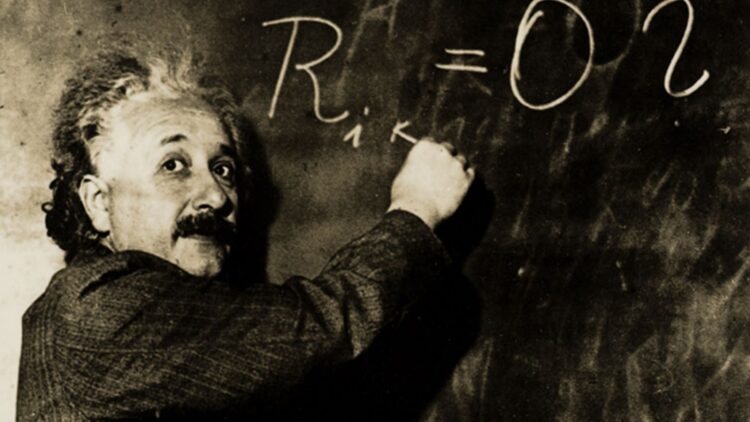
A hundred years after Einstein proposed that time is not absolute, science is still trying to prove it with real data. This time, it won’t be with equations on a chalkboard, but with precision technology at 28,000 kilometers per hour, in space, and we will witness it live!!
Although we all wear watches, understanding how time really works is still one of the greatest challenges in modern science. The ACES mission not only tests a theory. It could also open the door to a new way of understanding the universe. Who knows, we’ll have to stay tuned!