
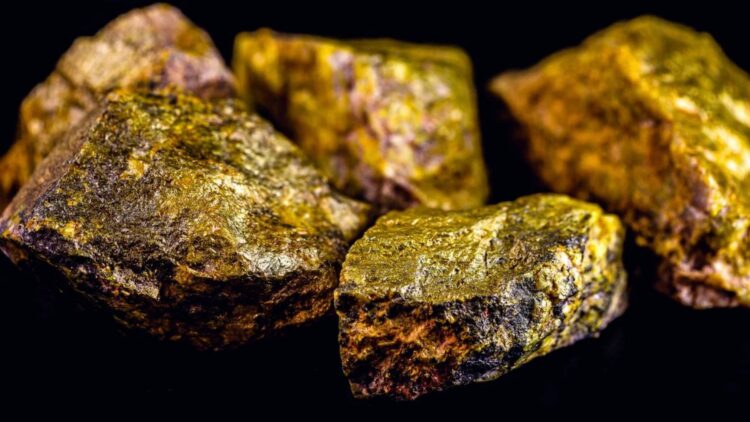
China has just made a major move with its latest discovery: millions of tons of uranium in the Ordos Desert, a find that not only allows it to stop importing this key mineral from the United States but also completely changes the rules of the game in the global nuclear market. The China Geological Survey has officially confirmed it, and the message is clear: the country now has its own fuel to power its nuclear plants and strengthen its path toward energy independence, which is particularly curious given that this is happening right at the moment when there are the highest geopolitical tensions in the world.
With this discovery, China’s energy security is assured, but it’s something that could destabilize our country and the global uranium market, lower prices, and disrupt the balance we knew until now. We tell you everything we know about this find and how it may end up affecting us.
A treasure in the Ordos Desert
The Ordos Basin was already known for its reserves of gas, coal, and oil, but no one imagined it hid one of the largest uranium deposits ever found on Chinese soil. The most surprising thing is the type of terrain: wind-blown sandstones, a type of geological formation that until now was not considered useful for uranium exploration.
But in 2021, China applied new technologies, and where it was initially believed to have no potential for uranium, it has now become a basin for this material.
What does this discovery mean for China?
Beyond its economic value, the discovery has political, strategic, and even military implications. Having an internal supply of uranium means the country no longer has to rely on third parties to maintain its energy networks, and until now, China depended largely on other nations to fuel its reactors. Now that international uncertainty seems to be the new norm, this is worth its weight in gold.
China has been betting heavily on nuclear energy as an alternative to fossil fuels, and this reserve gives it a decisive boost to continue leading that transition. Now, it has its own uranium, its own reactors, and, most importantly, autonomy.
Breaking dependence on the United States
Until now, much of the uranium that came to China came from other countries, and that dependence was a weak point in its energy policy, because any sanctions or spark could jeopardize the energy supply of one of the largest nations in the world. But by discovering this deposit, that vulnerability is completely eliminated, and China will be able to self-supply as it maintains its nuclear plans to have the smallest ecological footprint, without worrying about how other states might react to the conflicts we are facing.
Does this affect the global market?
Of course! Let’s keep in mind that we’ve started a new game with a new player, and it’s a powerful player because the reserves are huge. On one hand, it increases the available supply, which could lower the price of uranium. On the other hand, it pushes other countries to reactivate their own explorations.
The methodology China has used also sets a precedent. What was previously discarded is now back on the table thanks to new techniques. So it’s likely that other countries will be encouraged to explore similar terrains to see if they have the same luck.
What technology has China used?
The success of this operation was not a matter of luck. It was based on combining historical data with modern technologies like geospatial analysis, 3D modeling, and advanced prospecting.
China has found exactly what it needed at the moment it needed it most. It no longer has to depend on anyone to fuel its nuclear plants. Not even the United States.
While the world continues to debate how to abandon coal and gas, China is two steps ahead and has launched the plan that could guarantee energy for the next decades. All thanks to a desert that seemed to have nothing… and that was full of the future!