
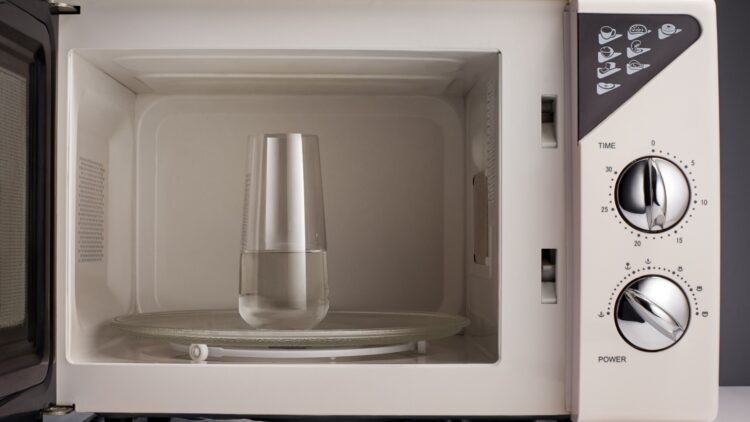
Your microwave could be about to explode… and you didn’t even know it. We don’t want to sound alarmist, but if you’ve been heating water in the microwave, unfortunately, you’ve been doing it wrong. It’s not your fault, it’s not like you don’t know how to microwave, but now the U.S. Food and Drug Administration (FDA) has issued a warning. While heating water in the microwave may seem harmless, it can cause silent overheating (because you won’t see any bubbles or prior signs). The water will boil violently in just a few seconds, which could cause severe burns or even short-circuits in the appliance.
What nobody explained about how microwaves heat things
The problem isn’t the appliance itself, but how it works. The microwave doesn’t heat evenly. Instead of generating heat from the bottom, like a pot on the stove, it agitates the water molecules with electromagnetic waves. It’s fast, yes, but it can also create invisible hot spots that raise the temperature above 100°C without a single bubble. And that’s where the danger begins.
Because if, at that moment, you stir the water or add something, like a spoonful of coffee or a soup packet, the liquid can suddenly boil violently. It’s as if it exploded from the inside.
What exactly is superheating?
It’s when water exceeds its boiling point without actually boiling. It appears calm, but it’s charged with accumulated energy. And with the slightest movement, it releases like an eruption.
This mostly happens in smooth cups and pure liquids. Without impurities or bubbles, water doesn’t have anywhere to start boiling, which is why the heat builds up in such a dangerous way.
How to prevent your coffee from becoming a bomb
The good news is that it’s easy to avoid. You just need to follow some basic tips before putting your cup in the microwave.
- If you’re heating water, put something in the cup before heating it. Something solid, like a wooden spoon (please, never put metal in the microwave!). You can also use a stick, a tea bag, whatever, but something that creates a point where bubbles can form and dissipate the energy.
- Choose an appropriate container, like glass cups that have dielectric compounds (which don’t conduct electricity) and are also heat-resistant. Avoid thin plastics and objects that don’t specify they are microwave-safe.
- Don’t fill the cup to the top: Leave some space. If the water gets overheated, it needs room to expand without spilling or splashing. And if you’re going to cover the cup, use something loose, not a tight-fitting lid that traps the steam.
- Stir before… and after: Before heating, stir the liquid. And after removing it from the microwave, wait a few seconds and stir again carefully. This will help avoid hidden hot spots that could suddenly activate.
Not everyone has had this scare.
But documented cases exist. People who microwave water without thinking and end up in the ER with burns from sudden boiling. And the most frustrating thing is that most of these accidents could have been easily prevented.
No, you don’t need to throw out the microwave or stop using it. You just need to understand how to use it properly. So, next time you microwave a cup, remember this: If you don’t see bubbles, it doesn’t mean it’s cold. It could be about to explode. Add something inside, wait a few seconds after removing it, and stir very carefully. That simple gesture can save you a nasty scare… or a visit to the hospital. Enjoy your hot drinks without the risk of a dangerous surprise!!