
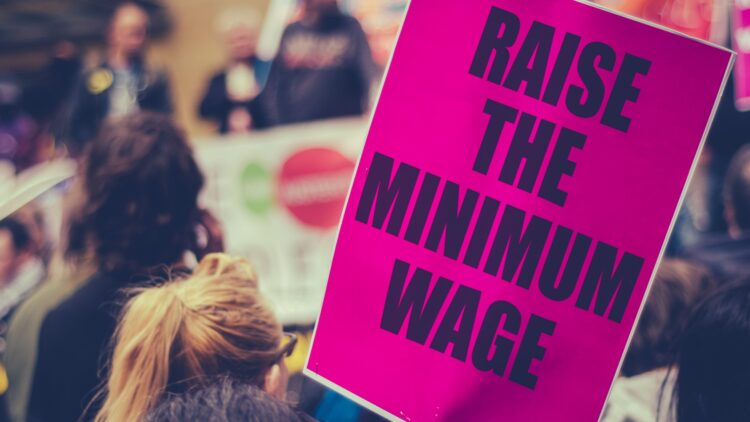
The New Year hasn’t even started yet, and it’s already bringing us the best news it has to offer. Starting January 1, millions of Americans will see their wages skyrocket, as more than 30 states have a federal minimum wage of $7.25 an hour. This figure hasn’t changed for more than 15 years, and with today’s life and the huge inflation that the country is going through, it’s practically impossible for average wages to provide for a comfortable life.
So, several states have chosen to implement an increase in the minimum wage year after year. For now, there are 30 states that have legislation that offers wages above the average wage, including New York-New Jersey and Connecticut.
Minimum wage increases in 2025
Starting on the first day of 2025, minimum wages in these three places will increase as follows:
- Connecticut: from $15.69 to $16.35 per hour (+$0.66).
- New Jersey: from $15.13 to $15.49 per hour (+$0.36).
- New York: from $15.00 to $15.50 per hour, except in New York City, Long Island and Westchester, where it will go from $16.00 to $16.50 (+$0.50).
With the increase in wages in Connecticut, it marks a milestone by exceeding $16 per hour (!), placing it among the states with the highest wages in the country. Likewise, some areas of New York reach similar figures, consolidating their place as leaders in salary improvement.
What to do if your salary does not go up?
The increases are the result of state laws that require employers to comply with the new minimums in the place where these measures have been implemented. If your salary is not adjusted accordingly, you can file a complaint:
- Connecticut: Through the Department of Labor.
- New York: Call 833-910-4378 or visit the NY Department of Labor website.
- New Jersey: Through the NJ Department of Labor.
If you work in a state that does not enforce state laws and adopts the federal minimum wage ($7.25 per hour), check directly with your state Department of Labor for further guidance.
Why are wages increasing?
As we have said before, “life is very expensive” as some would say, so, now that inflation is hitting the country, it is wreaking havoc on the poorest households that already have a hard time making ends meet. With this wage increase, the economic pressure that some families are experiencing is expected to be alleviated a little while inflation is still present. Although they do not mean an exaggerated increase, they can help fill the shopping carts of many workers around the country.
Will these be the only states that raise their wages?
Other states such as California and Washington will also increase the minimum wages for their workers, with the minimum hourly wage estimated at $16.50 and $16.66 respectively.
What can we expect from future wage adjustments?
Inflation is wreaking havoc on the most vulnerable families. Many states have adopted automatic adjustment mechanisms linked to the CPI (Consumer Price Index) to ensure that workers. For example, New York, starting in 2026, will adjust its wages to the Consumer Price Index for Urban Salaried and Public Employees (CPI-W), so that if there is an economic crisis, there will be no problems with what workers earn.
Not all states have adopted these wage increase measures yet, however, it is expected that they will soon be implemented in areas where the cost of living is higher than in other places, as a possible strategy to combat wage inequality and poverty in these areas.