
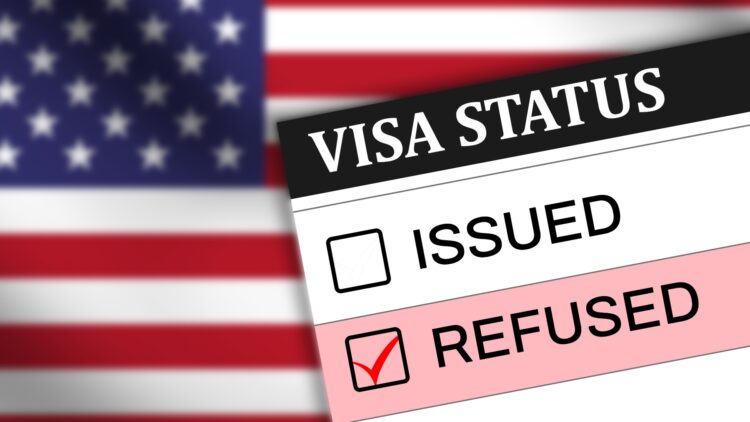
Donald Trump’s announcement of possible measures against international students has set off alarm bells in all US universities. The re-elected president of the United States has abandoned the idea of withdrawing visas from international students who become involved in social protests (in a context in which social protests have gained more strength than ever). Thus, thousands of foreign students have seen their freedom of expression threatened, posing a rather worrying scenario.
During his election campaign, Trump and his government team made it clear that they want to toughen immigration policies and limit activities that they consider “radical” (of course, any demonstration contrary to their ideological position is considered radical). And, although they have not specified what the measures will be, he wants to make it clear that he will not allow migrants to demonstrate their opinion especially when participating in pro-Palestinian protests against the Israeli colonizing regime.
The case of Momodou Taal
One of the most notorious cases in this news is that of Momodou Taal, a well-known activist who was studying for his doctorate at Cornell University. Taal was participating in one of these demonstrations in favour of the Palestinian resistance, however, this fact ended with his deportation from the. The reason? “violating the rules of coexistence,” as the university directors assured, despite the fact that the protests were peaceful and were repeated for several days on their campus.
International students: under the spotlight
The worst of all is that Taal’s case is not the only one, but that thousands of students face the same dilemma: exercising their right to protest and putting their immigration status at risk. The possibility of losing their visa has generated tension between foreign students, who now have to stifle their war cries for the possibility of losing their immigration status. The Association of International Educators (NAFSA) has urged universities to advise their students on the legal implications of participating in these types of demonstrations.
Protests under Trump’s radar
The former president has described some demonstrations as “anti-American,” using a nationalist discourse that further polarizes the political environment. Although he has not yet given details on how he plans to implement these measures, the message is clear: the protests could have severe consequences for foreign students, in order to silence voices that contradict him on issues, mainly, foreign policy.
The American people have already shown themselves several times against the actions of the American government in Gaza and the support of the Biden’s and Kamala’s government to the state of Israel. Since the beginning of the conflict (more than 70 years ago), the United States has supported the government of Israel. However, this last year of genocide of the Palestinian people by the Israeli army has made many Americans open their eyes to the participation of the US government in the extermination of an entire country under the impassive gaze of society.
The reaction of universities to this threat
Universities play a crucial role and it would be ideal if they did not stand aside in the face of this issue that restricts the rights and freedoms of those who are actively participating in American life. Many of them have begun to implement workshops and informational seminars so that these international students are aware of the risks they could face if they participate in one of these demonstrations, but also know their rights if they do so.
Despite the alarming tone of Trump’s proposals, many people trust in the ability of civil rights organizations to resist these measures. Students and teachers are united in their fight to preserve an environment where the right to expression is protected. While international students face these challenges, they also find support in communities committed to justice and inclusion.
And may they never be silenced.