
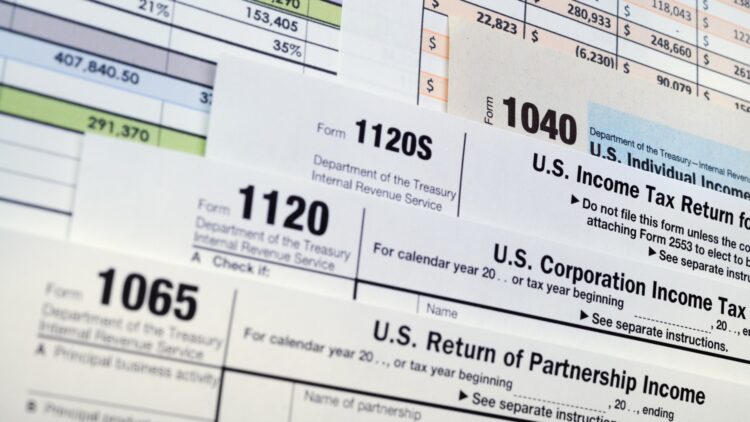
The current year is almost over, but not the fiscal year, which still has a long road of taxes and accounts to be done until April. The IRS has recently announced the new tax percentages that taxpayers will have to consider in their 2025 returns (corresponding to the 2024 tax year). So, we are going to explain in detail everything you need to know so that you are not caught off guard this tax season and you can organize yourself well, avoid fines and know what you have to pay according to what you earn!
Tax rate update
Each year, the IRS updates tax rates based on taxpayers’ taxable income and marital status, so we’ll outline them for you below.
| Tax rate | Single filers | Married filing jointly |
| 37% | Over $609,350 | Over $731,200 |
| 35% | Over $243,725 | Over $487,450 |
| 32% | Over $191,950 | Over $383,900 |
| 24% | Over $100,525 | Over $201,050 |
| 22% | Over $47,150 | Over $94,300 |
| 12% | Over $11,600 | Over $23,200 |
| 10% | $11,600 or less | $23,200 or less |
What are tax rates?
Tax rates are the percentage that people must pay to the Administration on the income from economic activities (it is one of their tax obligations). With this contribution, essential public services are maintained. For example, if you have a salary and the tax rate on your income is 20%, it means that for every $100 you earn, 20 goes to the government to finance these public services.
On the other hand, these rates vary depending on how much you earn, where you live or the activity you carry out. Although they may seem like a burden, we must not forget that they are essential to offer real equality of opportunity for people who need help from the state.
And that amount of taxes can’t be reduced?
Under federal tax law, some personal expenses can be reduced by taking what’s called the standard deduction (a set amount that taxpayers can subtract from their taxable income without justifying expenses).
The data for tax year 2024 are:
- $29,200 for married couples filing jointly
- $14,600 for single taxpayers or married taxpayers filing separately.
- $21,900 for heads of household.
When do deductions not apply?
There are several points you can’t overlook, because it means the standard deduction won’t apply to you if…:
- If you or your spouse, when filing joint returns, were nonresident aliens (at some point in the tax year).
- If your tax situation includes a period of less than one year due to a change in your accounting period.
Summary of the most important points.
- What will be the highest and lowest rates for 2025? The highest rate is 37% for income over $609,350 (single) and the lowest is 10% for income of $11,600 or less.
- What happens if I don’t file my return on time? You could face fines and penalties, as well as delays in any refund you are entitled to, however, you can request an extension of the filing period.
- Are you required to itemize deductions? No. If your deductions do not exceed the standard deduction, you do not have to.
- How does my filing status affect my taxes? Determine the income thresholds for each tax rate and the applicable standard deduction amount.
- Are there changes to tax credits for 2025? Although rates have changed, many common tax credits, such as the low-income credit, remain in effect.
So, now you have all the information you need to prepare for this tax season, don’t be caught off guard, prepare your documents and pay your taxes! Remember that we all build the country together, and it is everyone’s job to continue building it with our public resources!