
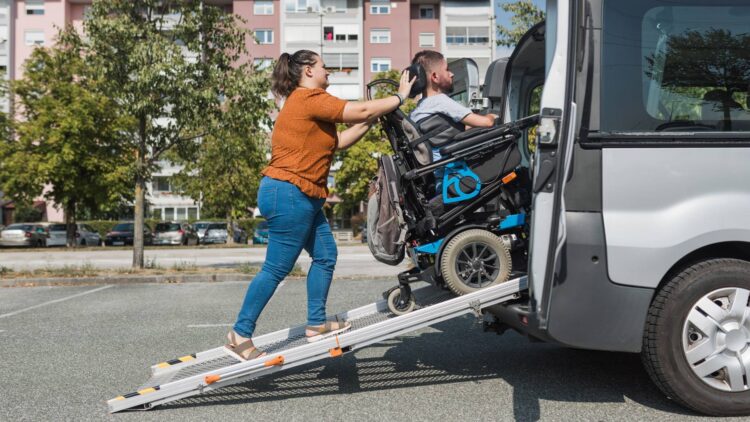
Imagine you are facing one of the most difficult times of your life: a disability has completely changed your routine and now every day is a challenge for you and your family. What if you were told that there was a programme specially designed to help you get help quickly and without bureaucratic hurdles? That’s the promise of the Social Security Administration’s Social Security Disability Insurance (SSDI) grant program, an initiative that aims to lend a helping hand to those who need it most in these conditions. Now, with recent changes and the inclusion of new conditions, this opportunity is a ray of hope for thousands of people in the United States. We will explain here how you can benefit and why these modifications are making a difference in the lives of those facing severe disabilities.
What is the Compassionate Allowances program?
Compassionate Allowances Program (CAP) is a programme that quickly identifies applications for SSDI (which is for people who meet legal disability criteria). This programme is designed for people who urgently need financial support for severe disabling conditions, meaning that, upon confirmation by a doctor (obviously a diagnosis is needed) many applications are automatically accepted.
What changes has SSDI implemented?
This new update, the so-called compassionate allowance programme has added a total of 9 new conditions to the list of those eligible for this programme:
- Adults and children who are on the list for heart transplantation (status levels 1A/1B) 2.
- Histiocytic Syndromes
- Costello syndrome.
- Persons awaiting cardiac transplantation (status levels 1 to 4)
- Histiocytic neoplasms.
- Neonatal Marfan syndrome.
- PACS1 syndrome.
- Plasmablastic lymphoma.
- Renal medullary medullary carcinoma.
- Snijders-Blok-Campeau syndrome
This means that the programme has been opened up widely to cover people with other conditions as well, so that they can receive the support they need more quickly.
And what are the benefits?
For these people, once they are diagnosed with these types of conditions, a battle begins to be fought. So, the fact that the SSA recognizes these diseases as eligible for this program, for many of them, and knowing how the health system is in this country, any help becomes the opening of a new world. Thus, more than a million people have benefited thanks to this acceleration of the program.
How do you submit the application?
Through the SSA application or in a physical office, remember that your disease needs to be on the list to qualify, as well as a diagnosis that clearly and up-to-date shows that you continue to suffer from said disease.
Complete the application online and follow the guidelines stipulated by the SSA to qualify for your payment.
Does it have any impact on Social Security?
Of course, the implementation of these adjustments in the program directly impacts the functioning of Social Security, because, while response times are expedited (and the bureaucracy that drives us crazy is also reduced) the SSA can use more resources to attend to other types of requests. So, as such, it does not improve anything, but it does help to change the public perception of the social system.
Key points about these new changes:
- They are mechanisms to identify applications from people with severe disabilities
- The program covers a total of 287 conditions.
- You need to present a medical diagnosis to qualify
- These changes have been implemented with immediate effect.
So, since every day counts for these people, this change ensures that help reaches the people who really need it on time, efficiently and without so much paperwork. This change is a step towards making life more accessible for people with severe disabilities.