
NASA and ESA have discovered a new galaxy! This galaxy, the NGC 685, is a barred spiral galaxy in the Eridanus constellation and it is smaller than our Milky Way. The remarkable thing about it is the star formation and the H II regions (pinky clouds) which can make astronomers know more about this star process. Thanks to the Hubble Space Telescope, along with data from James Webb Space Telescope (JWT) and Atacama Large Millimeter/submillimeter Array (ALMA), detailed images of the galaxy were possible.
I know all this may seem so complex to understand, but we are going to tackle this important event for science in a very casual way. From now on, everybody will know what the Hubble is capable of and NASA’s latest discovery. So, let’s not waste more time and get into it!
New NASA discovery
NASA is the National Aeronautics and Space Administration and it explores the unknown of space. Here, scientists are studying space all the time, searching for new things that can make them know more about space and the universe.
Recently, NASA’s Hubble telescope has captured amazing images of the universe where we can see a galaxy called NGC 685 which is so far from us that the light we see there now is from 64 million years ago. Can you imagine how far it was from us? These are the wonderful and fascinating things the universe keeps showing us.
The NGC 685 galaxy
This galaxy is way different from the other galaxies because the NGC 685 is a barred spiral one. What is this weird name? It means the galaxy has spiral arms highlighted by young blue stars.
Scientists not only found this galaxy, they also studied it and discovered it was full of new stars and H II regions. The first ones appear as bright blue dots in the galaxy image and, the latest, are pink clouds.
Fun fact! Did you know our Milky Way has the same shape? Although the NGC 685 is double the size smaller.
This discovery was possible thanks to Hubble
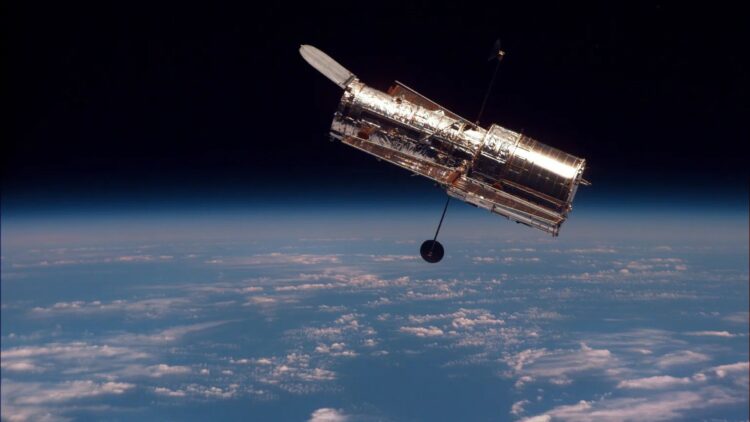
Hubble? Yes, this name has already been mentioned, but what is it? The Hubble Space Telescope is one of the most important tools NASA has for complex missions like this one. However, astronomers are also using two more telescopes, so let’s gather the information about what they used:
- The Hubble Space Telescope: uses visible light, UV light and infrared light to observe elements of the universe far, far away.
- The James Webb Space Telescope (JWST): uses infrared light to see through space dust.
- and the Atacama Large Millimeter/submillimeter Array (ALMA): listens to radio waves from space.
Is this discovery important for us?
Well, not directly, but yes it is. This new discovery allows astronomers to keep learning about space and this particular case is very interesting for them because this new galaxy is full of new stars. Now, they are using Hubble’s data in two different projects to study how stars are created.
With the current data they have collected, they can create a list with 50,000 H II regions (remember, where the stars are born) and another with 100,000 star clusters (groups of stars born at the same time).
Don’t you think this discovery is fascinating? Basically, we can know how our galaxy and the stars are created, so we would be able to see what happened in the past thanks to these telescopes. As always, science is essential to understand the world and what’s out there. Currently, there are so many active NASA missions in space, so who knows what discovery is coming next?