
NASA has found a mysterious object far away from the Sun. A planet? Or maybe an asteroid! Not at all, scientists have found an active comet in a place far far away from our solar system that sunlight almost doesn’t reach, where everything should be frozen and out of action. The remarkable thing is the celestial body is breaking the current theories on how comets behaved.
We keep getting new discoveries from NASA and it’s very important for further studies of the solar system, mostly to know how it was billions of years ago. So, let’s see how NASA found this mysterious comet.
A new comet was found
First of all, what’s a comet? It’s a type of object in space made out of ice, dust and rock. When the comet is near the Sun, the heat makes the ice transform into gas without passing for the liquid state and this is how a kind of cloud is formed around the comet, along with a bright tail (what we see from Earth).
Comets are active when they are a specific distance from the Sun, between 3 and 5 astronomical units (AU) – an AU is the distance between the Earth and the Sun. However, this new comet found by NASA was a peculiar one because it was active in a far far away distance from the Sun.
C/2025 D1 (Gröller)
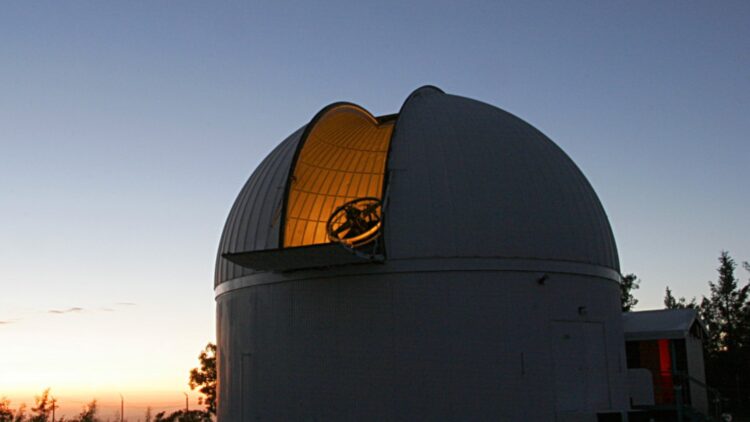
This creative name is how the comet was called, because it was found by an astronomer called Hannes Gröller. He worked in the Arizona University and he used the Catalina Sky Survey telescopes to find objects in the sky, and he did found one.
What was striking for astronomers about this comet is that it was never nearer than around 1.24 billion miles from the Sun (around 14.1 AU). The comet was located way past Saturn and near Urano, where the temperature is so cold and comets tend to be out of action in these circumstances. However, the C/2025 D1 (Gröller) was totally acting the opposite way.
Active comet at a huge distance from the Sun
This was the weird thing about the comet, so it made scientists think the comet was emitting other gas different from water vapor, like carbon dioxide or carbon monoxide because they can become gas even if the temperature is less warm.
Sam Deen, an amateur astronomer, has proposed the idea of this comet being formed differently to others, ones that are more sensitive to cold temperatures. Both explanations support the idea that the comet shouldn’t be active taking into account where it was found.
A unique comet or maybe not…
Not really, it’s true this situation is not very common, but it doesn’t mean it is a unique one. This comet belongs to a group of other 4 known active comets at 20 AU of distance from the Sun and scientists call them ‘’dynamically new’’ because they have never been near the Sun. Basically, this would mean these comets can be frozen from nearly the beginning of the solar system creation, more than 4 billion years ago.
Importance of this discovery
These peculiar comets may contain original material from the time when the solar system was created, which would be so useful for scientists to learn how space was billions of years ago. It could also mean a possible open window to understand what happened after the Big Bang.
Don’t you think it’s remarkable the many things that are happening now in space and we don’t know about it? The most important thing is that there could be a future discovery that will help space science in further studies.