
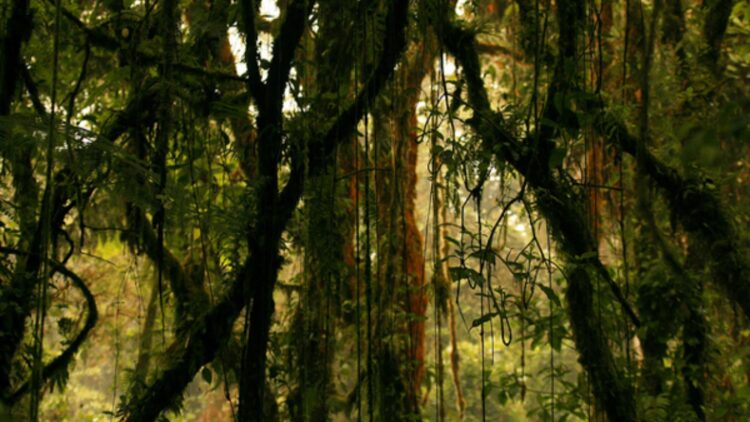
Lianas, the same ones Tarzan swung from in his movie or the ones you see in the jungle, those long, flexible vines that climb up tree trunks are… everywhere. Yes, everywhere, and that’s the problem. It’s not that we don’t want Tarzan to swing from them and lose his sex appeal, but new research is confirming that these plants (considered “plant parasites”) are spreading like an invasive species, a real pandemic that is damaging the actual ecosystem of the jungles.
Lianas: a plague
These vines are spreading like real parasites in the world’s jungles (so much so, they can be seen from space). And researchers at Leiden University have figured out why: they are expanding at a rate of 10% to 24% per decade.
And maybe you think this fun-looking plant isn’t harmful but…
What do lianas cause?
Starting with displacing trees from their natural habitats, lianas reduce carbon storage capacity by up to 95% and, to top it off, they are so reflective that satellites can already see their signature from space!
Dubbed the “green pandemic”, it alters the dynamics of tropical rainforests, worsens climate change, and threatens the biodiversity of half the planet. And we don’t want that!
More CO₂, more vines
Atmospheric carbon dioxide has reached record levels and all plants grow faster under these conditions, but lianas take even greater advantage: they don’t invest resources in strong trunks, instead these sneaky climbers “steal” support from trees and produce light leaves. That way, they colonize in record time, hog the sunlight, and end up weakening the other trees.
Pandemic
For years, the increase in lianas was thought to be a phenomenon limited to Latin America, but this is more like a metastasis, over 300 studies reveal the spread is also affecting Africa and Southeast Asia. In regions of Panama, Brazil, and the Congo, there are plots where the vines completely block new tree growth, turning primary forests into dark and unproductive tangles.
It wasn’t until 2016 that this species was treated as an invasive one that had begun to silently plot its wicked plan.
The forest loses its “lungs”
If you paid attention in elementary school, you’ll know that healthy trees act as carbon sinks: they capture CO₂ and store it in their biomass for decades. When lianas choke them, photosynthesis drops and the wood dies, releasing part of the stored carbon. Simulation models show that in areas with high liana density, the forest can lose up to 30% of its CO₂ capture capacity.
Problems in the food chain
By covering the canopy, lianas reduce the amount of light reaching the forest floor, altering microclimates and causing the disappearance of plants that depend on intermediate light levels. With them go insects, birds, and specialized mammals… A domino effect on biodiversity.
Detected from space
Yes, it’s been incredible to learn that these lianas can be seen from space, and far from being good news (because it means there are too many), these plants can now be monitored from above, because they create a distinctive shine in images that are key to mapping them and seeing if they keep spreading like a plague or if their growth slows down.
What should we do?
The data is very complex, and many suggest cutting the lianas to free the trees from these vines… but that process is expensive and difficult to apply worldwide, so we’ll have to reduce CO₂ so this plant doesn’t spread further and we can keep our amazing forests, which are our extra lungs on Earth!
Ver esta publicación en Instagram