
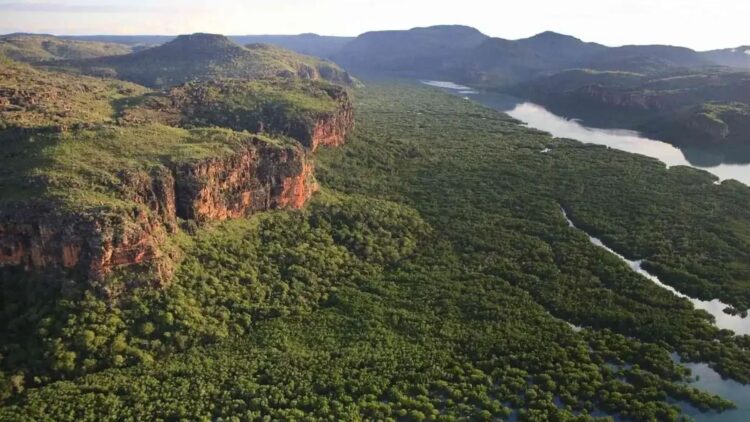
Another archaeological discovery! This time is a forgotten civilization found underwater in the North of Australia, in Kimberley. Some researchers and scuba divers found remains of an ancient human settlement that was inhabited for more than 50,000 years ago. This place is now completely sunken and it has shown valuable information on how this civilization lived and moved in this part of the world.
This finding has changed some ideas about the history of mankind, climate change in the past and ancient civilizations’ capacity to adapt. This archaeological discovery connects us with the past, but also gives us clues about how to deal with current and future challenges. So, let’s start!
Underwater discovery
Near the north coast of Kimberley, Australia, some scientists and scuba divers witnessed something fascinating: an ancient city sunken underwater. Nobody knew about this for thousands of years, but it was known it was inhabited by a civilization more than 50,000 years ago. This is one of the most ancient settlements found in the region.
How do we know how ancient this place is?
According to scientists, this settlement was built in a period called Late Pleistocene, way before the existence of writing and cities were built. DNA studies, fossils and materials found show modern humans arrived at this place between 48,000 and 50,000 years ago.
Of course they did not have cars, electricity nor houses like us today, but they were able to find other ways to survive, build shelters, obtain water and food, and even create communities. This is probably the most fascinating aspect about this civilization, how could they reach those conclusions without all the tools we have today?
Description of the territory
Although it’s now underwater, this place was a large land, a bit bigger than the United Kingdom, which became the perfect place for this civilization to live. Researchers focused on signs of rivers, freshwater lakes, and similar things because these things explain how they would have obtained the food and water.
This place was full of life, humans and animals. It’s estimated that between 50,000 and 500,000 people could have lived here during different periods.
The lost civilization
12,000 years ago, at the end of the Ice Age, the climate changed and temperatures were higher. So, as a consequence, the ice melted and the sea level increased leading to the sunken of most of this territory under the ocean.
What happened to the civilization here? Well, they had to move to other nearby islands to survive. This was a tragedy, but also it was the beginning of sea voyages because these people had to go to other islands, so they became the first explorers of the sea known by history.
Scientists want to know more
Scientists are studying the remains of the territory to reconstruct how life was in this civilization such as what they ate, how they lived, what animals there were and so on. This process is called Paleoenvironmental reconstruction. They also think there could be more places like this around the world, so they are willing to keep discovering more sunken ancient territories.
We should always learn about the past because everything that happened back then is a lesson to what is happening now or will happen in the future. For example, ancient civilizations had already faced important climate changes and they found out ways to adapt to the environment. So, if they could do it thousands of years ago without the advanced technology we have now, how couldn’t we?
The perfect combination would be to learn from past civilizations and use our technology, don’t you think so?