
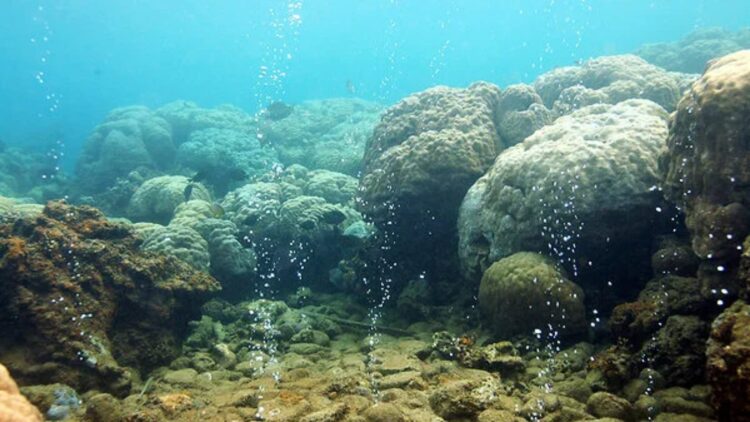
Ocean acidification is a reality and it’s causing many negative consequences. This is happening because the sea is absorbing carbon dioxide in the air which changes the water composition. A study on this matter shows that acidification of oceans has reached serious levels affecting marine life, fishing, tourism and people who live nearby.
Due to climate change, the oceans are very damaged and we see news about it all the time. So, let’s see what scientists have to say on this issue.
What’s acidification of the oceans?
This is the process in which the ocean absorbs the carbon dioxide in the atmosphere and this gas creates a chemical reaction when mixed with water, it reduces the pH of the oceans. This makes oceans more acidic and, as a consequence, the chemical composition of the water changes which damages marine organisms. Think about corals, mussels, oysters and other types of planktons; they need calcium carbonate to make their shells. So, if the ocean has less calcium carbonate, marine creatures won’t be able to properly develop which risks the marine ecosystem due to the dependence of many animals on these marine species to get food or seek refuge.
Scientific discovery
Scientists combined computer models with actual field measurements to study ‘’planetary boundaries’’ of acidification of the oceans. This boundary shows how much could the ocean change before it gets dangerous for marine life. Basically, if aragonite (calcium carbonate) lowers 20%, the ocean is considered to have crossed a risky limit. Why? Because most animals need this to survive.
Which place is experiencing this in a faster way?
According to Helen Findlay, an oceanographer from the Plymouth Marine Laboratory in the United Kingdom, polar regions (near the Antarctic and the Antarctica) are where the highest alterations on the ocean’s surface happen. On the other hand, in the deep sea they happened near polar regions too, but also in the East Coast of North America and near the equator.
Gravity of this situation
We won’t notice the increase of acidification of the ocean right away if we look at the sea from the coast, but there are huge negative consequences.Apart from damaging marine ecosystems and marine life deep down the sea, it also affects people who live near the coasts because they depend on fishing and tourism.
Warning!
Scientists are so worried about this ocean situation that they have even contradicted the study we mentioned before. The study showed 20% reduction of the aragonite is the limit, but scientists disagree and say the limit to become a proper dangerous situation should be 10%.
They warn about taking action because the consequences could be worse than expected… There have been found 9 planetary boundaries that we should cross if we want to keep the planet’s ecological balance. The study shows we have already crossed 6 of them and this acidification would be number 7.
What should be done?
Experts are asking for a quick response for this problem, they suggest some ideas to start:
- Taking action on the most affected regions.
- Protecting places that are still in good conditions to prevent any damage.
- Reducing greenhouse gas emissions to stop acidification.
Climate change is damaging every aspect of our planet, even if we don’t notice at first sight. Institutions should listen to scientists and study their data to come up with solutions to avoid crossing all 9 planetary boundaries. Let’s remember we have already crossed 6 of them, so number 9 is not that far… Unfortunately, if we aren’t the ones directly affected, we don’t connect with the tragedy, but it’s a tragedy that will surely affect us.