
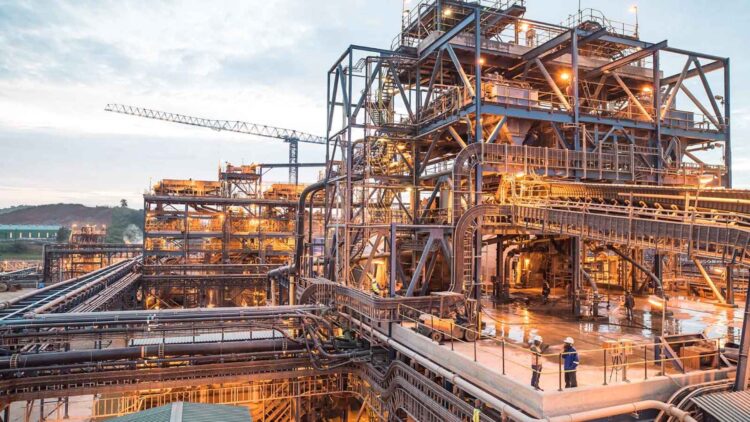
The reopening of a mine has alarmed experts and international authorities. Why? Because this mine, which takes the underground energy on a large scale, has been analyzed by scientists who warn about the possible impact. Although it might seem a valuable source of energy, recent studies show it could become a major environmental danger. The exploitation of the deposit in developing countries can lead to a potential catastrophe, with serious consequences for ecosystems and human communities. That’s why experts consider the existence of a global risk related to this activity, and they have made a scientific warning on stopping or rethinking similar projects before it’s too late.
Mining activities have always been considered to be damaging for the environment, and this seems to follow the pattern. So, let’s see why experts and authorities are worried about the reopening of a mine.
The controversy
There’s a huge debate about mining in developing countries, specifically in the gold mine of Kibali, in the northeast of the Democratic Republic of the Congo (DRC). This mine is considered an advanced and positive example of the sector, but it shouldn’t be reopened because of what it represents in a bigger and problematic system.
It’s true mining activities generate wealth, but it also creates social, economic and environmental consequences which, in most cases, are higher than the benefits these activities promise in the short term.
Developing countries are the key for mining megaprojects
In the last decades, countries with huge amounts of natural resources, but weak institutions, have become the main aim of international mining companies. This is happening because their lands are rich in minerals like gold, copper, lithium, etc., and their social, legal and political structures aren’t very consolidated yet. So, these countries agree on foreign mining inversions with disparity conditions, since they need the money, jobs and infrastructure.
Why is mining so problematic?
Mining is an extractive activity, which means materials that took thousands or millions of years to be formed are taken from the subsoil. Not only affects the extraction of these resources to landscapes, but also:
- Fragile ecosystems.
- The way nearby communities live.
- Pollutes the air, water and soil.
- Destroys or changes water sources.
- Can move entire populations.
As we mentioned before, developing countries accept any activity that will make them earn money, so these extraction consequences will be more intense and less controlled in these countries.
3 reasons why mining isn’t a model of development
The first reason is unequal negotiations because governments, pressured by lack of resources and fiscal crisis, give in too much power and benefits to foreign companies. Due to this, the value generated through the minerals doesn’t stay in the country of origin.
Another reason is the undiversified economy. Many countries are completely dependent on mines, therefore, they forget about other sectors like agriculture and other services. As a consequence, they are extremely vulnerable to price changes on minerals in the global market.
The last reason is long lasting socio-environmental impacts. Even though mines work for 10, 20 or 30 years, the negative effects can last way more like water pollution, deforestation or impoverishment of communities.
What’s special about the Kibali mine?
The Kibali mine is the largest gold mine in Africa and it has a capacity of around 7.2 million tonnes of resources. What’s more, it is considered one of the most technical advanced mines in the world.
It has achieved many things like: obtaining more than 80% of the energy from renewable sources, investing $4,700 million in the local economy and it has funded social and environmental projects.
What’s the issue with reopening it?
Even though the Kibali mine is an example of relatively responsible mining activities, most projects in developing countries don’t have the same standards and reproduce a system full of inequality. So, the reopening of this mine will mean the legitimation of a failed structural system.
The wealth earned won’t be distributed in a fair way and the negative impacts will exist for so long due to these activities. It’s paradoxical that the richest mineral countries are the poorest in human development.