
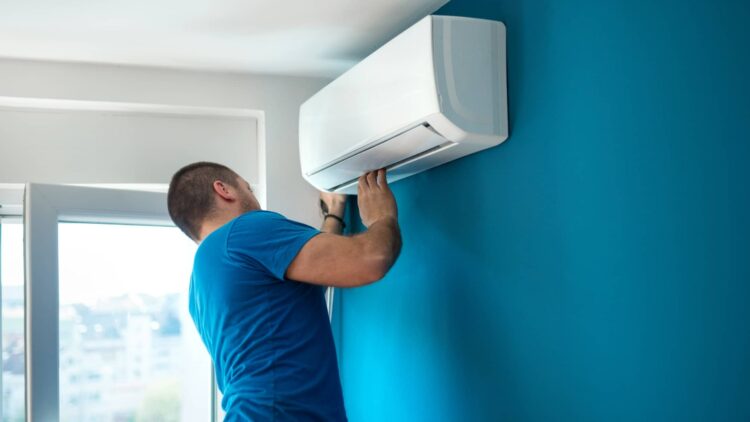
When the air conditioner stops cooling… we panic. We’ve all been there, especially with these high temperatures that make the middle of the day feel almost like Mordor.
When our AC decides to stop working for a few hours, the first thing many people think is that it ran out of refrigerant gas. And while that usually means calling a technician (which is what any normal person would do), we’re here to tell you a simple trick that might help you figure it out and save yourself the technician’s visit. Got a thermometer nearby?
And no, just in case, we didn’t make this up! A professional installer revealed how to check if the unit has gas without using a pressure gauge. You just need to set the unit to cooling mode and observe the temperature of a few key parts. And the best part is, no technical knowledge is needed, just observation.
How to know if your AC has refrigerant gas
Super easy. Turn on the AC in cooling mode and let it run for a few minutes, then find the pipes that connect the indoor unit (the one inside your home) to the outdoor unit.
Got it? Good. The thicker pipe, called the suction line, should feel very cold to the touch. It might even have a bit of frost on it, which means it’s working with gas and functioning properly.
If the pipe feels warm or at room temperature, there’s likely a leak or a lack of gas. In that case, you’ll have to call a technician to check your whole system (and get your wallet ready).
The thermometer trick
Another way to check if it’s working properly is to measure the temperature of the air coming out of the indoor unit. Place a thermometer on the vents, being very careful not to insert it too far so you don’t damage the internal fan.
A well-functioning air conditioner should blow air at about 10 degrees Celsius. If the temperature is higher, something’s not working right, and it could be related to the gas charge or a compressor issue, but that’s for a technician to confirm.
Can you recover the gas before uninstalling the unit?
If you’re planning to remove your AC unit, there’s a simple and safe way to recover the gas so it’s not lost. This is important because refrigerant gas doesn’t get used up or expire, and it should be reused if there are no leaks.
Here’s how to do it:
- Turn the unit on in cooling mode.
- Use an Allen key to close the thinner pipe’s valve.
- Wait one minute.
- Then close the suction pipe’s valve too.
This lets you remove the unit without losing gas, but it should only be done if you know how to handle the valves properly. If you’re not sure, it’s always best to leave it to a professional…
Why is it important not to run out of gas?
Refrigerant gas is essential for your AC to work! It’s responsible for absorbing the heat inside and releasing it outside. If there’s not enough gas, performance drops and the compressor can suffer long-term damage. And fixing that isn’t cheap…
Also, gas doesn’t get used up or evaporate on its own. If there’s not enough, it means there’s a leak, so just refilling it isn’t enough. You have to find and repair the leak.
This summer, if you notice your air conditioner isn’t cooling like it should, don’t rush to recharge the gas. Use the thermometer trick, check the suction pipe, and make sure the indoor unit is blowing cold air.
And if you still can’t figure out what’s wrong, time to call a technician, who’ll fix it in no time!