
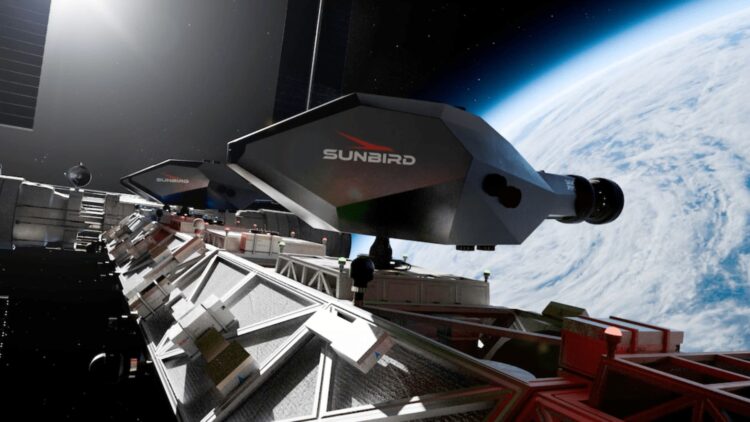
Pulsar Fusion company has developed a new engine that will make rockets reach Mars in just a few weeks! Sunbird, the name of the fusion engine, will be a turning point in the future of space travel because it’s designed to reach up to 800,000 km per hour. This will reduce the time missions take, for example the next mission to Mars will take half the time in comparison to now.
There are other companies related to the automotive industry who have tried to contribute to the space industry. However, this engine project, led by Pulsar Fusion founder (Richard Dinan) and the collaboration of Princeton Satellite Systems, has caught the attention of NASA because it’s a realistic alternative and efficient for missions whose destination is way further than the Earth’s orbit. So, let’s learn more about this fusion engine and its future!
Going to Mars in less time!
A new engine for rockets is the new technological advance in the space industry. A British company called Pulsar Fusion, has developed a propulsion system so fast and efficient that it could reduce the time it takes to reach Mars, since it’s capable of reaching 800,000 km per hour.
Currently, unmanned missions to Mars take about 7 months, but with the new engine this could change to 3 or 4 months.
Technology of this engine
This is a fusion engine, which means it uses nuclear fusion to generate energy. What makes nuclear fusion different from the rest of propulsion methods? Well, it can produce a lot of energy with little fuel and it also doesn’t emit any polluting emissions. This hasn’t been considered a proper method to include in the space engines because it was difficult to control.
However, the new Pulsar Fusion engine has taken advantage of the issue that worried experts: plasma leakage. Now, this leakage has been transformed into part of the propulsion system and the plasma generated is easier to control because it is formed by positively charged protons.
How does it work in space?
The system is called the Sunbird Migratory Transfer Vehicle and it is thought to work in space, not from Earth. Let’s explain the process to better understand what this means:
- The spacecraft lifts off as usual from Earth.
- Once it’s in orbit, it hitches to the Sunbird which is already waiting for it in space.
- That’s when the Sunbird takes control over the travel and accelerates the spacecraft to the destination, with its nuclear fusion propulsion.
Thanks to the sustainable fuel and the capacity to keep the acceleration for long periods of time, there will be space missions that were thought to be impossible in the future.
What happens now?
The first model of this engine is expected to be tested in orbit in 2027, which will be the next step to prove its functionality in a real context. Let’s have in mind this engine can be efficient, autonomous and capable of generating 2 megawatts of power making it the perfect system for long and complex missions. So, the Sunbird could be a revolution in space missions to the solar system and beyond.
It is remarkable how many companies are investing in the space industry, which is great for future space investigations that could help us with our planet. Let’s hope this new Sunbird engine system passes the test in 2027 and NASA scientists could count on it for missions they already have in mind. Could this innovative idea, led by Pulsar Fusion company, be the new era of space exploration? We will have to wait almost 2 years to see what happens…