
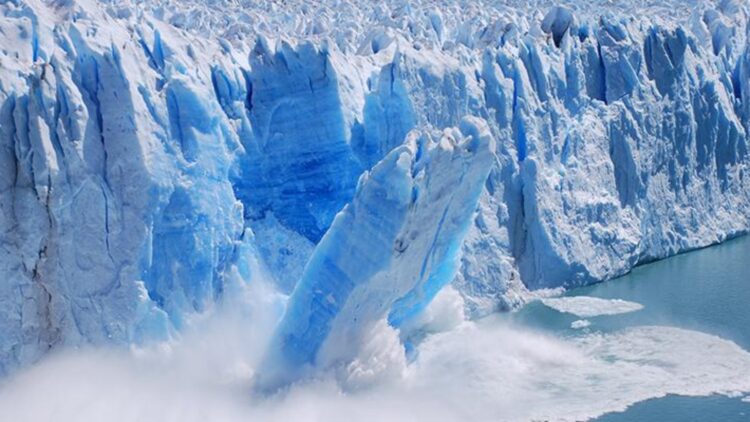
We all have heard about climate change, but do you know melting glaciers could generate volcanic eruptions around the world? According to vulcanologist Pablo Moreno-yaeger, from the University of Wisconsin-Madison, this could become a reality in the future… In the Goldschmidt Conference, a study was presented that showed the connection between these glaciers and the possible reactivation of inactive volcanoes, like Mocho-Chosuenco in Chile under the ancient Patagonian Ice Sheet.
The Intergovernmental Panel on Climate Change warns this phenomenon has already been analyzed in Iceland, but it could also affect other places such as America, North America, New Zealand and Russia. As climate change keeps increasing, more greenhouse gases will be released which could make the volcanic activity rise. Do you know what will be the result of all of this? Global warming getting even worse. So, let’s learn more about what could be the future of our planet.
Glaciers waking up volcanoes
Climate change is the cause of many negative phenomena contributing to the damage to our planet Earth, one of these is melting glaciers which could reactivate inactive volcanoes in different parts of the world. This happens because the ice covering these volcanoes puts a very high pressure on the Earth’s crust, keeping the magma underground.
So, since glaciers are melting the pressure disappears and the Earth’s crust raises a bit, making the underground magma go up in an easier way too. On top of that, gases inside the magma have more space to expand which is one of the conditions that could generate volcanic eruptions.
Scientific study
Scientists focused on studying glaciers and volcanoes in Patagonia, in southern South America. Around 18,000 years ago, this place was covered by a huge ice layer and the magma accumulated and solidified about 10 or 15 km deep – due to the ice weight.
When the climate got warmer, the ice started to melt and the pressure disappeared, so the Earth’s crust slowly rose up and the magma could move and release gases much easier. With the passage of time, this was the cause of more explosive eruptions.
One of the volcanoes analyzed inChile was the Mocho-Choshuenco, which is currently inactive, but scientists found out the eruptive activity of this volcano in the past was related to advances and setbacks of ice in this region.
Should we worry about it?
Well, it’s not considered a danger in the near future because from the moment the ice starts melting to when eruptions occur, it could pass between 3,000 and 5,000 years. However, scientists warn that the current melting in places like Patagonia is happening faster than expected, making the Earth’s crust rise faster too. This is why experts believe it is better to be prepared, even though these eruptions won’t happen in a short period of time.
Other places apart from Patagonia
Patagonia is not the only place where this phenomenon is occurring, something similar was seen in Iceland where volcanoes are more active when glaciers have a setback. However, this study in Patagonia shows something new: this could happen on a larger scale in other continents like Antarctica and parts of North America, New Zealand and Russia.
In Antarctica, some simulations indicate that if the ice melts too much, this could increase the possibilities of volcanic eruptions in the future.
Consequences on climate change
Of course, climate change will be affected by this phenomenon because the more eruptions, the more greenhouse gases will be released. These gases will have a huge negative impact on global warming, therefore, glaciers will melt faster and more eruptions will occur. This is known as the positive feedback loop, where each element worsens the other.
It’s true this horrible situation on climate change won’t happen in the near future, but it’s better we know what we can do to make our planet Earth a better place now that we have time.