
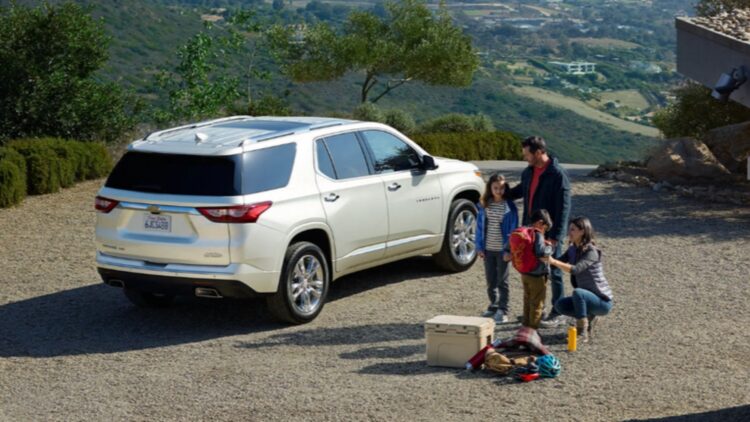
SUVs and your U.S. tax return, what’s the connection? SUVs like a Lexus and pickups used for both work and personal trips can make the Internal Revenue Service (IRS) take a closer look at your tax return. The IRS follows rules from Publication 463, Publication 15-B, and Section 179 of the U.S. Tax Code to decide what expenses you can deduct. Your W-2 Form will show important info about taxes like Medicare and Social Security. Programs like TurboTax can help, but you must be careful to follow the rules! So, let’s see why these SUVs could be a problem for your tax return.
Why the IRS might audit you if you drive this kind of vehicle
The IRS (Internal Revenue Service) might pay extra attention to you if you use a luxury SUV or a work vehicle that you also use for personal things. Even though there are tax deductions for using a car for work, certain vehicles — like big SUVs or cars given by your employer — can raise suspicion if you don’t meet specific rules.
This happens especially when people try to deduct more expenses than they should for work use of the car. The IRS is extra careful with these cases, especially when it’s about luxury vehicles or cars given by a company.
Deductions under watch
The IRS lets people deduct real expenses related to using a vehicle for work activities. But driving from home to your regular job doesn’t count as a deductible expense. That’s considered a personal trip, which is written in Chapter 4 of IRS Publication 463. Also, if you use the same vehicle for work and personal things, you can’t deduct all its costs as if it were used only for business.
TurboTax warns that cars people take home often seem suspicious, because it’s common to also use them for errands, trips, or driving kids to school. That’s why it’s important to keep a detailed log with: Dates, destinations, odometer readings, and reasons for each work trip
What is the IRS “vertical analysis”?
To check if the miles you reported make sense, the IRS compares your numbers with those of other people who work in the same type of job. If your numbers are very different, they can seem suspicious. This technique is called “vertical analysis.”
The luxury SUV trick
There’s a rule that lets people deduct up to $1,250,000 on business-use property in 2025, according to Section 179 of the Tax Code. But if it’s an SUV that weighs between 6,000 and 14,000 pounds — like a luxury Lexus — the first-year deduction is limited to $31,300.
However, pickups with a bed of at least 6 feet, cargo vans, and other heavy vehicles can get the full deduction. But there’s a condition: the vehicle must be used at least 50% of the time for work from the moment it starts being used. If later the work use drops below 50%, you’ll have to give back part of the tax benefit and pay taxes on that amount.
Vehicles given by an employer
When a company gives a car to a worker, any personal use is counted as income and must show up on the W-2 form like it’s part of the salary. This is in IRS Publication 15-B, which says there are three ways to calculate the value:
- $1.50 per trip (commute rule)
- 70 cents per mile (mileage rule)
- Annual lease value
Also, employees must keep a log of every trip with: Date, odometer reading, destination, and purpose. If work use goes below 50%, they must also return the tax benefits they got.
What this means for employers
Companies must add the value of every personal mile to the worker’s wages and report it on the W-2 form, Box 1, so income tax, Social Security, and Medicare can be applied. They can also mention it in Box 14 or as a side note with the label “PUCC” (Personal Use of Company Car). If this info is managed badly or sent in late, it can lead to extra penalties of 20%, and in some serious cases, fines for payroll tax errors.
As you can see, using SUVs or pickups for work or your personal life can have a negative impact on your tax return. The best way to avoid this is to have clear records and know IRS rules. So, be smart and be always prepared!