
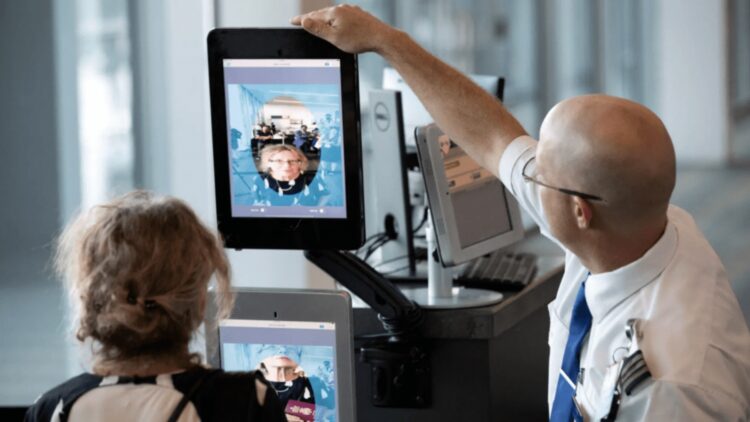
What is happening with facial recognition at airports? Since 2017, the TSA (Transportation Security Administration) began using facial recognition cameras at airports to verify passengers’ identities more quickly and improve security. Today, this system is already in place at 250 airports across the country.
But is it accurate? A May 2025 report from the Privacy and Civil Liberties Oversight Board (PCLOB) states that the system is very accurate, with less than 1% error rate (false positives or negatives). This makes it more reliable than other biometric methods.
The TSA has made some changes before, however, this one is being criticized by some people. So, let’s see why people don’t like this facial recognition system.
Why is there so much criticism?
Despite its accuracy, many passengers disagree with its use, and they are not properly informed that they can refuse to be photographed. According to a July 2025 study by the Algorithmic Justice League, only 1% of passengers were offered the option to decline facial scanning.
Many who tried to opt out reported bad experiences: rude treatment, delays, or even missing their flights.
Real cases
Let’s see some passengers real experiences with this system:
At Fort Lauderdale airport, a passenger asked not to be photographed, and the agent responded angrily: “We already took your picture” and “There are a thousand cameras here… even in your phone.”
In Las Vegas, another person who opted out had to wait more than 10 minutes while their documents were manually verified. The agent told them, “You should just allow the photo next time.”
Can facial scanning be declined?
In theory, yes, but there are some misinformation and negative sides:
- More than half of respondents never saw signs informing them of that right.
- 74% were not warned about the use of facial recognition.
- Over 60% fear that their photos could be used by third parties.
- 20% felt uncomfortable verbally opting out for fear of delays or mistreatment.
The TSA says that photos are not stored, except in test environments to evaluate the technology. But many people do not trust this.
What is Congress doing?
Some senators want to limit the mandatory use of facial recognition. In May, a group led by Jeff Merkley (Democrat from Oregon) reintroduced the Traveler Privacy Protection Act. This law seeks to:
- Ensure that no one is forced to scan their face to fly.
- Allow the use of documents such as a driver’s license instead.
- Require clear signage about the right to opt out.
- Protect collected data from misuse.
Merkley even showed a video in which he tried to avoid being photographed, but was told it was “too late” because he had already passed a camera. He accused the TSA of wanting to build a “library of faces.”
What do airlines and the industry say?
Airlines for America, a group representing airlines, says that eliminating facial recognition would make everything more expensive and less safe. They argue that without this technology, the TSA would need to hire more staff, which would represent a much higher cost.
The security industry, which sells this type of technology, also opposes the law. They say that limiting this system increases the risk of fraud, smuggling, human trafficking, or terrorism.
So, what is the main issue?
Although the system is technologically efficient, many citizens and legislators believe that there is a lack of transparency, real consent, and clear information for passengers. There is also concern that the government or third parties could use the images for other purposes.
What do you think? Would you feel comfortable being facially scanned at an airport without being asked for permission?