
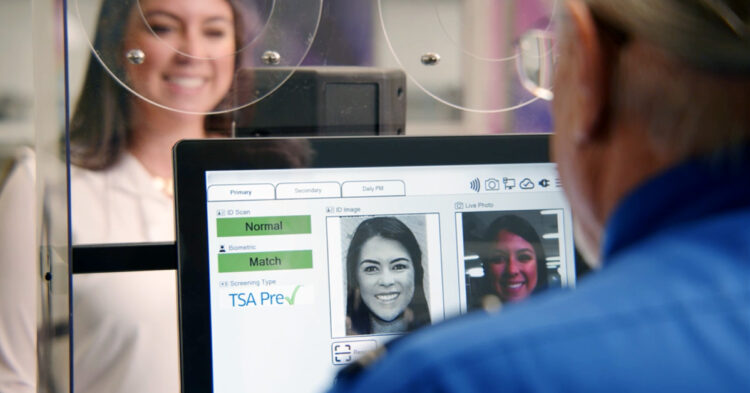
TSA has proposed facial recognition in all airports in the country, that rings a bell, right? Well now a new bill proposal is about to stop its use and offer a real alternative to those who don’t want to be scanned. And the thing is, think about it for a moment, there’s no reason to be scanned, but… why does the TSA want to scan your face? There have been hundreds of passengers who went through this process without being very sure they had accepted any terms policy, so now, the Bill will limit the storage of biometric data and reopen an important debate about privacy in security checkpoints.
It seemed like a legislative procedure, but it has become a political crisis within the Government itself! And it all has to do with Ha Nguyen McNeill, acting chief of the agency… and former executive at a facial recognition company.
What has changed in the TSA?
The TSA is streamlining the identity verification process at airports. When a passenger approaches the checkpoint, a camera takes a photo of their face and automatically compares it to the image stored in their passport or official ID. If there is a match, they can continue without showing any paper. But of course, the debate comes up when people start to wonder what the TSA does with your biometric data. Yes, it’s very easy and simple, but what happens afterwards?
The bill
The initiative, promoted by senators Jeff Merkley (Democrat) and John Kennedy (Republican), aims to allow passengers to refuse a facial scan without suffering consequences, delays, or dirty looks from the agents. Also, the TSA would have to clearly inform about that option and explain what other verification methods are available, the usual ones!!!
And no, the agency would no longer be able to store biometric data without a time limit, they will have a time and purpose limit to be able to store your data.
Can it be refused?
Yes! Of course you can, it’s your full right, but many people don’t even know that because there is an impressive lack of transparency at the TSA.
The TSA’s response hasn’t gone down well… neither inside nor outside
The agency hasn’t taken long to react. According to several media outlets, TSA senior officials have “serious concerns” about the law. They claim facial recognition speeds up controls, improves security and reduces wait times. But this firm defense could cost them. Big time.
McNeill’s past
We mentioned Ha Nguyen McNeill earlier, current acting chief of the TSA, well apparently this man used to work at a company that developed facial recognition software for airports. And now, he leads an agency that refuses to limit the use of that technology. Yikes!
And maybe you think that’s not suspicious, wait for a moment. Donald Trump plans to nominate him as permanent TSA chief, wow, interesting, we know. But with a bipartisan bill underway, and doubts about his impartiality, his confirmation in the Senate is more and more uncertain.
There is division in the Government
Yas. According to sources from the Department of Homeland Security, Secretary Kristi Noem is not opposed to the bill. And that puts McNeill in a very uncomfortable position: he’s defending the opposite of what his own boss thinks. A risky move right when he needs support to keep the job.
What could ha ppen now?
If the bill moves forward, the TSA will have to change its protocols in thousands of airports and start talking about privacy more seriously. If the bill gets blocked, McNeill might stay in his position… but not without political wear and tear.
And in the meantime, millions of travelers keep asking the same thing every time they go through a checkpoint: What do they do with my face