
Possible side effects of Gadolinium in MRI scans. Magnetic resonance imaging (MRI) is one of the most widely used medical tests to obtain detailed images of the inside of the body. It is very common in people who have suffered injuries, especially athletes, as it allows doctors to see the condition of muscles, ligaments, joints, and internal organs with great precision.
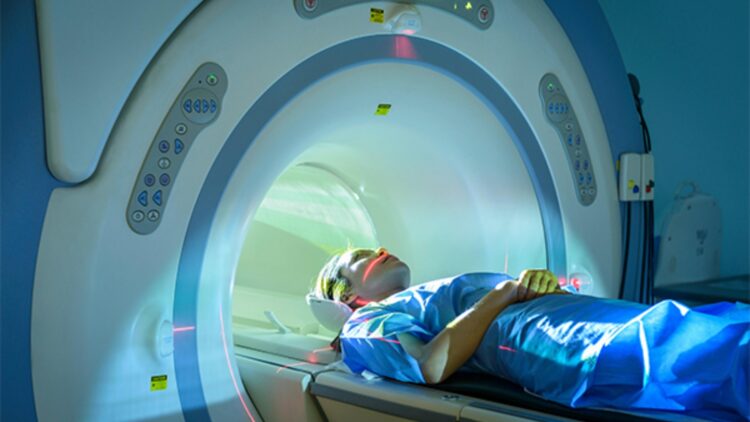
The procedure itself is simple: the patient lies on a table that slides into a tunnel-shaped machine. For about 30 minutes, the machine makes a loud, repetitive noise while taking the images. It does not hurt and does not use radiation, as X-rays do. After a few days, a specialist reviews the images and gives the diagnosis.
However, in some cases, to improve the quality of the images, the doctor may decide to use a contrast agent. One of the most commonly used is gadolinium, a metal that helps highlight certain areas of the body in the images. This contrast is usually administered intravenously just before the test. But, what’s the problem behind this? Let’s find out.
Unexpected Reactions
In most patients, gadolinium does not cause problems. However, research increasingly suggests that, in some people, this metal may cause uncommon side effects.
A recent study found that gadolinium can interact inside the body with oxalic acid — a natural substance found in foods like spinach, blueberries, and even in vitamin C.
When gadolinium and oxalic acid combine, they can form compounds called gadolinium oxalate. These compounds can enter cells and accumulate in the body’s tissues.
Nephrogenic Systemic Fibrosis
The problem arises when the accumulation of gadolinium oxalate reaches high levels. According to the study, this could cause nephrogenic systemic fibrosis, a serious condition, which can affect various parts of the body:
- It causes thickening of the skin, which becomes hard and tight.
- It can generate joint stiffness, making movement difficult.
- In severe cases, it damages internal organs such as the heart or lungs.
Dr. Brent Wagner, professor in the Department of Internal Medicine at the University of New Mexico School of Medicine and lead author of the study published in the journal Magnetic Resonance Imaging, explains that this is the most severe disease caused by gadolinium-based MRI contrast agents. “Some people have died after receiving only one dose,” warns the specialist.
A Rare but Notable Risk
Most MRI scans that use gadolinium go smoothly. In fact, millions of people around the world have them every year without any issues at all. However, studies like this help to better understand how the body reacts to certain substances and in which cases complications may arise. This allows doctors to make safer decisions, such as reviewing the patient’s medical history before using gadolinium or considering alternatives when possible.
What to Know If You Are Taking an MRI with Contrast
If your doctor has recommended an MRI with gadolinium contrast, it does not mean you should be alarmed. It is important to:
- Inform your doctor about any health problems you have, especially if they affect your kidneys, as these organs are responsible for eliminating gadolinium from the body.
- Mention any adverse reactions you have had before with medical contrast agents.
- Ask if there are alternative options without contrast, depending on the type of imaging needed.
The aim of researchers and doctors is to minimize risks and ensure that this diagnostic tool remains safe and effective. MRI with gadolinium contrast continues to be one of the best methods for obtaining precise images of the inside of the body, and possible side effects are very rare.
So next time you or someone you know needs an MRI, you’ll understand not just how it works, but also what to ask your doctor to make sure it’s the safest option for you.