
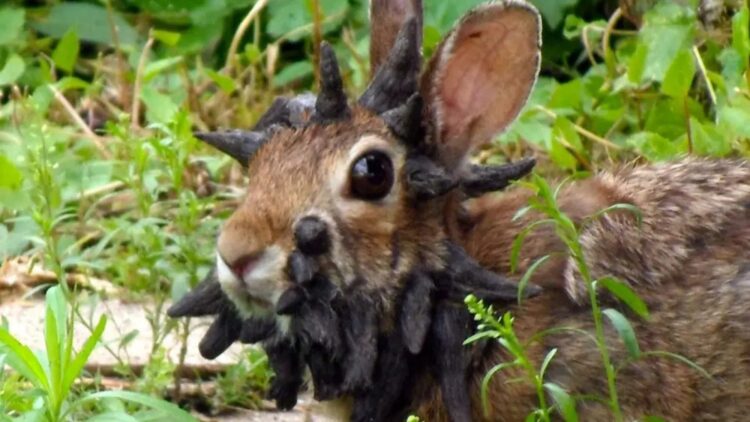
It’s not AI, it’s not made up, it’s real and it’s happening in Colorado. Many residents have reported a plague of rabbits with strange shapes, odd growths and elongated parts on their heads. And yes, of course, they’ve been called Frankenstein rabbits (poor Mary Shelley if she saw this).
These animals have caused a lot of amazement but also concern among neighbors. What’s happening to these rabbits? It seems they’re infected with the cottontail rabbit papillomavirus (CRPV), also known as Shope papilloma virus, a disease that causes dark tumors around the head and spreads mainly through insect bites like fleas and ticks… But they’re scary.
Wildlife authorities have confirmed that the virus poses no risk to humans or other pets, but it can be deadly for infected animals. Images shared on social media show the rabbits with growths that look like spines, tentacles or black “beards”, which has led to comparisons with fictional creatures. Poor little animals.
What causes the se strange growths?
CRPV is transmitted during the warmer months, when insects like fleas and ticks bite rabbits and introduce the virus into their system. Although some animals can overcome the infection on their own, in many cases the growths become so large they prevent the rabbits from eating, which causes them to die from starvation…
Are domestic rabbits at risk?
In domestic rabbits, the disease is usually more serious, with a risk of developing squamous cell carcinoma, a potentially deadly type of skin cancer… So it’s very important to avoid any contact between wild and domestic rabbits, and if possible, don’t take your rabbit anywhere with insects or fleas that could put your little furry friend at risk.
Background and other cases
Even the current outbreak is centered in Colorado, there have already been documented cases in other parts of the American Midwest. In 2013, a video recorded in Minnesota showing a rabbit with these deformities went viral, and was compared to the mythical Jackalope, a figure from popular culture created by attaching fake antlers to stuffed rabbits.
In Fort Collins, a neighbor said she saw one with “black sticks coming out around its mouth” that showed up again even a year later, with even bigger growths!!!
Recommended measures from experts
Authorities insist on not approaching or handling infected rabbits. If a pet becomes infected, a vet can surgically remove the growths to prevent them from becoming malignant tumors. However, there is no definitive cure for CRPV, so the best thing is to keep our pets away from this phenomenon.
No risk for people
Even though the image of Frankenstein rabbits may look like something out of a post-apocalyptic movie, experts stress that the virus doesn’t affect humans or other species. The real issue is its impact on wild animals and the suffering it causes in those affected.
The case has caught the attention of media and users online, becoming an example of how a local wildlife disease can generate a strong public reaction, especially due to its visual impact. Did you know Frankenstein rabbits exist?