
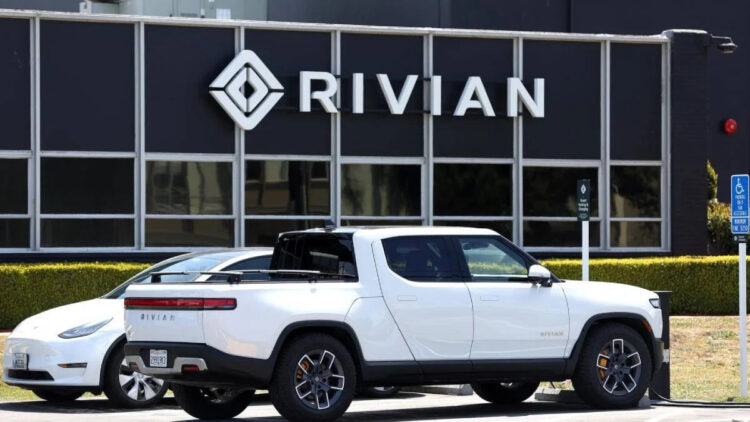
For many years, fuel efficiency credits have been a great ally for vehicle manufacturers, but now the rules have changed forever and with that, Rivian will lose 100 million dollars that directly depended on that system to sustain its revenue.
The reason? The Trump administration has decided that efficiency is no longer a priority, so it has put on hold the procedures needed to validate these credits. Result: manufacturers that bet on clean vehicles now find themselves in limbo, and those that never embraced the change celebrate greater regulatory freedom.
And this change has paused the certificates that the National Highway Traffic Safety Administration (NHTSA) had to issue to validate those credits! What is going on?
What are combustion efficiency credits?
They are a system that rewards manufacturers of efficient cars. If a brand makes electric cars or low-consumption cars, it generates credits that it can sell to others that make less eco-friendly models.
Rivian against the ropes
For a long time, companies like Tesla survived thanks to these credits. The red numbers were covered with the sales of credits to manufacturers that did not comply with the rules. Rivian thought it could follow that same recipe, but it could not.
According to the Wall Street Journal, those 100 million blocked represented an important part of Rivian’s expected revenue. We are not talking about pocket change: that figure can mean the difference between continuing a project or having to freeze it (do you know how many zeros are in 100 million???). Besides, the competition is biting and every quarter counts, this one certainly will not be Rivian’s best.
What does the government say?
The NHTSA argues that this measure is part of a readjustment of the CAFE (Corporate Average Fuel Economy) standards, with the goal of “making cars more affordable”. Sounds great, but the reality is that manufacturers that invest the least in efficiency no longer have penalties (and they love it, but we do not).
During Biden’s term, the rules pointed in the opposite direction: to encourage electric, put pressure on traditional manufacturers and push the energy transition. Not now, now another message is being sent: we give oxygen again to those who resisted change. Startups, which already had it tough, now have it even harder.
And yes, Tesla already went through this, for many years its accounts depended entirely on these credits. In 2020 alone, it pocketed 1.8 billion just from them, but it had time, market, and support. Rivian has none of that and the environment, of course, is no longer the same.
And outside the US?
Well, the world is pushing very hard towards electric. In China, Stellantis has received an official scolding to speed up its electrification. In South Africa, Toyota already has a date to launch three new 100% electric models in 2026. In other words, while some are slowing down, others are stepping on the accelerator, no one can be left behind!
And then there is Ford, which keeps making the news… but for other reasons. So far in 2025, it has already had 102 recalls. Yes, 102. That represents 40% of all recalls in the United States this year. Problems with lights, software, mechanics…
So, what will happen with Rivian?
Beyond the money, freezing these credits sends a dangerous message: that there are no guarantees for those who bet on electric. And that can cool investments, slow developments, and hold back the whole transition. If Rivian does not find another way to generate revenue, it may have to stop part of its growth, or at least hit the brakes.
And in the long run, that can also affect the consumer. Because if incentives disappear and emerging brands have a harder time, it will be more difficult for the electric car to reach more pockets, and therefore, the energy revolution will take much longer…