
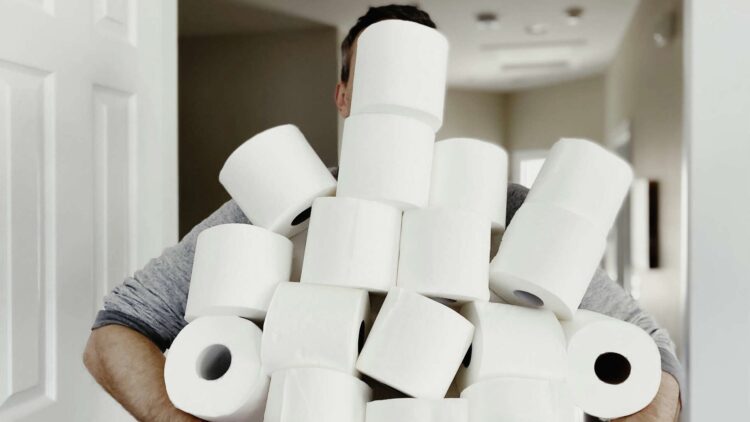
When you go to the toilet, you use toilet paper to clean yourself, right? Well, let me tell you this is changing. In the last few years, smart toilets with water jets, also known as washlets, have started to surpass toilet paper in Europe. Toilet paper is useful not only for cleaning after going to the toilet, but even as a remedy against mosquitoes. However, the debate is on which option is more hygienic, sustainable, and practical. So, let’s find out.
Origin of toilet paper
Have you ever wondered when people started using toilet paper? It goes back to 1857 in the United States when Joseph C. Gayetty started to commercialize it under the name of Gayetty’s Medicated Paper. This was made of Manila hemp sheets infused with aloe and marketed as a remedy for hemorrhoids.
The roll format started between the decades of 1870 and 1890, and it became the most popular format. Since then, toilet paper has been an everyday product and the standard of personal hygiene in millions of homes.
Good and bad sides
Of course, everything has advantages and disadvantages. So, let’s see which ones toilet paper has, let’s start with the positive things:
- It’s cheap and accessible.
- It doesn’t need special installations.
- It can be used anywhere.
Now, let’s talk about the downsides:
- Not always guarantees a deep cleaning.
- It can cause irritations on people with sensitive skin.
- Its manufacturing and elimination have a huge impact on the environment, since it requires great amounts of water and trees.
- It can generate issues in the sewage system, mostly when it is mixed with non-biodegradable wipes.
Smart toilets in Europe
You may have heard of washlets in places like Japan, where these have been part of their daily lives since decades. These toilets use water jets to have an intimate cleaning and they can also include functions such as:
- Controlling water temperature.
- Drying with warm air.
- Seats with heating.
- Automatic lids.
Now, this smart toilet phenomenon is getting bigger in Europe. Luxury hotels like the Mayfair Hotel in London or the Park Kyatt Paris-Vendôme already have them. Step by step, these toilets are also reaching people’s homes, airports and restaurants. How crazy is this?
Washlets v. toilet paper
Several investigations have found that the use of water is more efficient than toilet paper when it comes to personal hygiene. According to a study published in 2022 in the Journal of Water, Sanitation and Hygiene for Development, washlets significantly reduce the appearance of bacteria and microorganisms in comparison to only using toilet paper.
Why is toilet paper still used then?
Well, it’s not that easy to get rid of toilet paper. There are some factors that make incorporating these washlets everywhere so difficult: the price (from $1,200 to $7,000), installation (it needs plugs near the toilet), and cultural habits (some people reject leaving toilet paper).
The future of this traditional material
Although toilet paper is still the most used method for personal hygiene in Occident, this could change with the significant growth of smart toilets. If we have in mind factors such as environmental awareness, comfort, and cultural influence of countries like Japan; this change seems closer than we think.
Of course, in case this change happens, it’s not going to be from one day to the next because not everybody can afford it. I mean, if you consider the pros and cons, it’s true that smart toilets win. However, will society from Occident agree on changing the traditional toilet paper to smart toilets? It’s difficult to change habits, but who knows… Would you have a go at these washlets?