
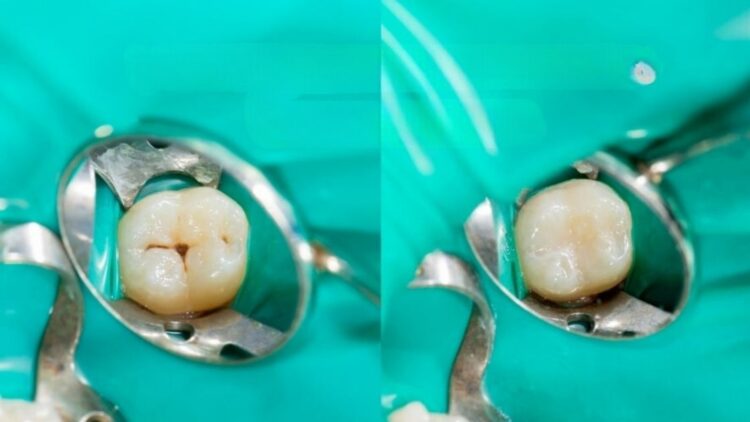
The keratin from sheep wool could be just what we need to repair dental enamel and prevent cavities. Yes, that same protein that is part of our hair or our nails could also help rebuild teeth. And the best part: in an ecological, cheap and quite effective way. We know it is strange, but we assure you that you are going to find it interesting.
The study was published in the journal Advanced Healthcare Materials and proposes something that, until recently, sounded impossible to many: using biological waste such as wool to create a protective layer similar to natural enamel, that adheres to the tooth, protects it and strengthens it.
Keratin, the great unknown
We know that keratin is in our body, but until now it had not occurred to us that it could serve to repair teeth. What researchers have seen is that, when applied to a damaged surface of the tooth, this protein can form a thin film that, when mixed with saliva, transforms into a hard layer, very similar to the original enamel.
Sara Gamea, from King’s College London, explains that this method is more natural, more resistant and less toxic than the plastic resins that are used right now in dentistry (those that also look super unrealistic). Those resins, over time, deteriorate, lose color, and do not integrate in the same way with the tooth, in some cases even damaging it.
The problem of enamel
One of the most frustrating things about dental enamel is that it does not regenerate. It is not like hair or bones. When it wears out or breaks, it is lost forever. That is why cavities are still so difficult to treat. And that is why this discovery is so important.
Sherif Elsharkawy, another of the researchers, believes that we could be facing the first real option to biologically restore a tooth. Not just cover it, but rebuild what had been lost!!
“We are entering an exciting era where biotechnology allows us not only to treat symptoms, but also to restore biological function using the body’s own materials” -Elsharkawy
How does it work?
The process is not complicated at all. The scientists extracted keratin from sheep wool fibers, mixed it with water and applied that mixture to damaged teeth. In a few weeks, the layer began to attract calcium and phosphate, forming a hard, resistant surface with a structure very similar to lifetime enamel.
They are now working on turning this solution into products that we can all use, such as toothpastes with keratin or treatments applied in the dentist’s office. If all goes well and they get the support of the industry, the first products could arrive in a couple of years.
Understanding dental health
We are talking about being able to use natural waste to make even dentistry much more sustainable. Every year, more than 2 billion people worldwide suffer from cavities and have to go to the dentist to fix them. If this method can be applied on a large scale, we could be facing a real change in the way we take care of teeth.
And all from something as simple as a little wool. As Elsharkawy himself says, biotechnology is entering a new stage: it is no longer just about covering the problem, but about rebuilding what the body lost, using equally natural materials.
“With further development and the right partnerships with the industry, soon we will be able to create stronger and healthier smiles with something as simple as a haircut”.