
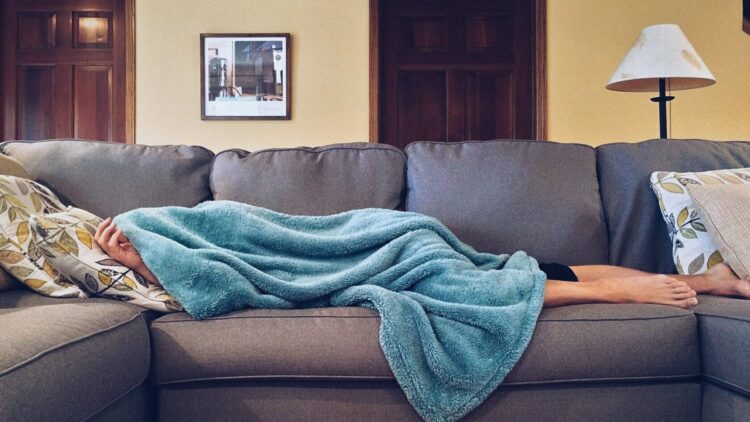
Every week the same story repeats, you are longing for Friday to arrive so you can… sleep. Yes, you are not the only one, it happens to many people, when you finally have a day to live, what you want is to stay at home with a movie, a good hot chocolate and your sofa. Which is more comfortable than any other place on earth. And no, you don’t miss the bustle of the bar, not even your favorite lunch from the corner bar, and probably not your friends either. No, you are not apathetic and psychology now says it, you simply prefer to choose your personal well-being over socialization.
They have called it positive solitude, of self-care and of the need to disconnect from social noise, so you are not an antisocial being, even if it seems like you suffer from social anxiety or fear of others. In a hyperconnected world, this trend reveals how our way of relating changes and how we seek a balance between inner calm and social life.
When being alone is a gift
Psychologists point out that many people find in their home a space of authenticity, without judgment or demands. And they have sold us the idea that solitude is synonymous with losing, with sadness, but it is the opposite. Knowing how to be alone is a synonym of emotional balance, you can organize your thoughts, recharge energy and reconnect with yourself, not forget yourself and not prioritize others over you.
Social anxiety
Not every time someone refuses to go out it is because of self-care. In some cases, the reason is social anxiety. The fear of being judged, of not fitting in or of feeling exposed turns what should be leisure into a moment of tension, and not everyone has the same level of sociability. Many find in social networks a controlled refuge where they decide how and when to interact, and that is why they prefer to stay at home, they can open and close the communication channel whenever they want and remain in their “bubble” safer.
The thin line between choice and isolation
Chosen solitude is positive, but when staying at home becomes an imposition, chronic solitude appears, with risks for mental health such as depression. Psychologists like Julianne Holt-Lunstad have shown that unwanted isolation can lead to depression, loss of bonds and feelings of alienation, and as social beings we are, it is not very good bread.
Self-care and constructive activities
Specialists recommend that those who enjoy their time at home do it with activities that nourish their well-being, like reading, meditating, cooking or gardening, nothing about lying on the sofa staring at the ceiling or tormenting yourself for what you said in 2012. You need to disconnect but truly, and turn solitude time into a moment of personal growth, so it is time to look for routines that are good for us!
Quality time with yourself
If you have the chance to stay with yourself, listen to yourself, take care of yourself, reconnect. Prepare your favorite meal, go for a walk without rushing (and without music!), hear nature, write in a notebook what you feel, observe the noise but from afar, enjoy the moment that is yours and for you, without anyone judging. Remember that in that little while you are your priority, night of face masks and skincare? Perfect. You want to read while drinking wine? Perfect too. You want to write what you feel or keep an intimate diary? Perfect! Small gestures that turn your “solitude” into a space full of meaning and love toward yourself.
What does staying at home really mean?
Staying at home does not mean being antisocial or hating the world. It means choosing tranquility when the outside becomes excessive, finding authenticity in the simple and, above all, listening to your own needs. The challenge is to maintain the balance: enjoying the calm without falling into harmful isolation.